By Outdoor Next Editorial standards
On this page
Key facts
- Main route
- 10 days, Christchurch to Queenstown; one way
- Return options
- 7-day inland loop or 14-day staged Christchurch return
- Driving references
- Approximate primary-source legs; stops and actual camps add time
- Checked
- 29 October 2026; no live availability or road-opening guarantee
Checked against official sources on 29 October 2026. Confirm with the official source before you go.
The main ten-day South Island road trip finishes in Queenstown. It pairs the Mackenzie, Wanaka and Te Anau areas rather than promising every coast in one holiday. The seven-day option returns to Christchurch without Fiordland; the fourteen-day option keeps Fiordland and a staged inland return. Confirm the actual rental return depot before booking anything else.
At a glance
| Decision | Planning choice |
|---|---|
| 7 days | Christchurch–Tekapo–Aoraki–Wanaka–Aoraki–Christchurch; shorten to the Mackenzie if tired or delayed |
| 10 days | Christchurch–Tekapo–Aoraki–Wanaka–Te Anau–Queenstown; one way |
| 14 days | Ten-day southern core with extra base days and Aoraki/Christchurch return nights |
| Best fit | Travellers who want time to camp, walk and change a weather-dependent day |
| Driving | Approx. published reference legs below; depot and campground approaches, stops and check-in are additional |
| Source check | 29 October 2026, Pacific/Auckland; not a live road or availability certification |
Choose the vehicle return and reserve the bases
Treat arrival and departure days as part days. Compare the actual depot, opening arrangements, one-way terms and costs before reserving camps. A campervan relocation can impose a different deadline. A campground mention is a comparison, not a reservation or permission to freedom camp.
Each day below gives two or three published campsite profiles. Choose one. Alternatives outside the named town change both the evening drive and the following morning; they are not neighbouring overflow pitches. City arrival/departure nights use holiday parks because no practical DOC town base is identified here. Confirm the exact vehicle, awning or tent category with the host.
Ten days: the main day-by-day plan
Day 1: Christchurch arrival and rest
Driving: local arrival/base day; no compulsory inter-town transfer is added. Calculate your actual depot/campsite approach with the NZTA Journey Planner and allow time to park, settle in and rest.
Organise the vehicle, food and sleeping setup, then keep the evening local. Do not add the inland transfer after a long flight. Confirm tomorrow’s camp and save the driving route.
Night 1: choose one
Day 2: Christchurch to Tekapo
Driving: Christchurch–Lake Tekapo approx. 228 km / 3 hr via SH1 and SH79. Source: Nature and Heritage Itinerary: Christchurch to Tekapo. All figures are approx., one way unless explicitly marked return, before sightseeing, check-in and campground approaches.
Stop for proper breaks and settle at the booked base. If there is still comfortable daylight, choose a short lakeside outing. The Tekapo Peninsula Walkway is a separate optional walk, not a check-in deadline.
Night 2: choose one
- Lakes Edge Tekapo Holiday Park
- Twizel Holiday Park — different overnight town
- Lake Poaka — DOC; different base near Twizel
Day 3: Tekapo to Aoraki/Mount Cook
Driving: Tekapo–Aoraki/Mount Cook village approx. 105 km / 1 hr 10 min. Source: Aoraki EOTC: time and distance tables. All figures are approx., one way unless explicitly marked return, before sightseeing, check-in and campground approaches.
Travel before committing to a mountain walk. Check DOC notices, parking and the weather, then settle into the chosen camp. White Horse Hill, Glentanner and Twizel are different overnight positions; use the correct road distance for your booking.
Night 3: choose one
- White Horse Hill — DOC; book before arrival
- Glentanner Park — holiday park outside the village
- Twizel Holiday Park — longer road return
Day 4: Aoraki walking or a mountain-weather buffer
Driving: local arrival/base day; no compulsory inter-town transfer is added. Calculate your actual depot/campsite approach with the NZTA Journey Planner and allow time to park, settle in and rest.
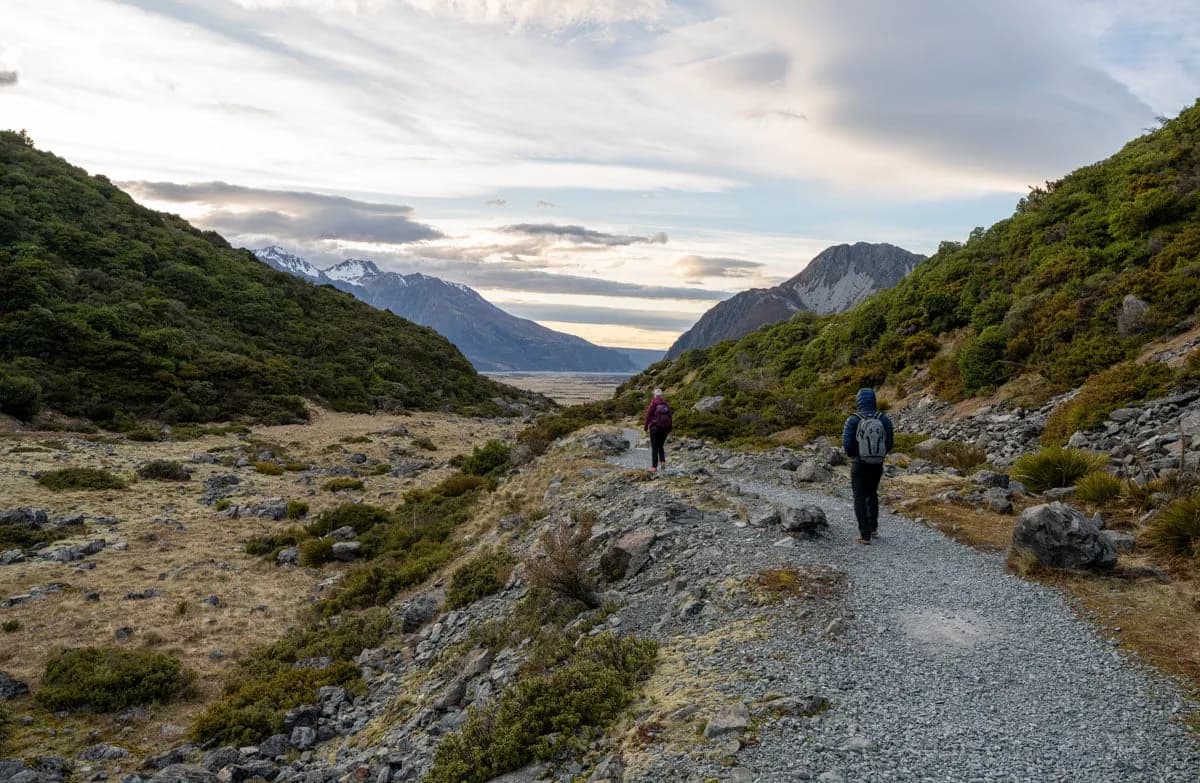
Keep the same base and choose Kea Point only when conditions suit. DOC lists approximately 1 hr return from White Horse Hill or 2 hr return from the village. Consult the current Aoraki walking guide for other options rather than assuming an old track status applies. Do not improvise a river crossing or higher alpine replacement.
Night 4: choose one
- White Horse Hill — DOC; book before arrival
- Glentanner Park — holiday park outside the village
- Twizel Holiday Park — longer road return
Day 5: Aoraki to Wanaka
Driving: Lake Wanaka Tourism gives Aoraki/Mount Cook–Wanaka approx. 2 hr 30 min, without a distance for that leg. Source: Driving to Wanaka. Add stops and your actual base approach.
Use the day for the inland move and rest breaks. Do not attach a long mountain walk to the afternoon. If you used Twizel instead of Aoraki last night, recalculate; this reference is not a Twizel estimate.
Night 5: choose one
- Wanaka Tasman Holiday Park
- Albert Town Campground — different base
- Boundary Creek — DOC; different base on Lake Hawea
Day 6: Wanaka recovery day
Driving: local arrival/base day; no compulsory inter-town transfer is added. Calculate your actual depot/campsite approach with the NZTA Journey Planner and allow time to park, settle in and rest.
Leave the tent or van set up and choose a modest Wanaka lakefront outing. Keep an early turnaround available. DOC closes Roys Peak from 1 October to 10 November for lambing; it is not a late-October replacement for the lakefront day.
Night 6: choose one
- Wanaka Tasman Holiday Park
- Albert Town Campground — different base
- Boundary Creek — DOC; different base on Lake Hawea
Day 7: Wanaka to Te Anau
Driving: Lake Wanaka Tourism gives Te Anau–Wanaka approx. 3 hr 30 min; use it as an approx. reverse-direction regional reference, not an all-weather promise. A distance is not supplied there. Source: RTO driving guide.
Select the road after current conditions and the rental agreement are checked. The Cromwell/SH6 route is the RTO’s more gradual option than the Crown Range. Finish in Te Anau, organise supplies and stop; do not continue to Milford Sound.
Night 7: choose one
Day 8: Conditional Milford Sound day
Driving: Fiordland NZ gives Te Anau–Milford Sound approx. 120 km / 2 hr each way: approx. 240 km / 4 hr return before sightseeing, parking and activity check-in. Source: Getting to Fiordland.
Use a suitable self-drive or separately booked coach/cruise plan only if road and weather advice support it. Mirror Lakes is a shorter turnaround; it does not bypass a closure. Keep the same Te Anau camp. A cancelled outing can become a rest day.
Night 8: choose one
Day 9: Te Anau to Queenstown
Driving: Fiordland NZ gives Queenstown–Te Anau approx. 170 km / 2 hr; use the same approximate reference in reverse and add your actual camp approach. Source: Fiordland NZ.
Arrive with time for fuel, cleaning and vehicle-return preparation. Compare a town holiday park with the DOC Moke Lake or Twelve Mile Delta bases only after checking road suitability and the following day’s departure. Do not add Glenorchy as a compulsory detour.
Night 9: choose one
- Queenstown Lakeview Holiday Park
- Moke Lake — DOC; check gravel-road suitability
- Twelve Mile Delta — DOC alternative
Day 10: Queenstown departure or a final local night
Driving: local arrival/base day; no compulsory inter-town transfer is added. Calculate your actual depot/campsite approach with the NZTA Journey Planner and allow time to park, settle in and rest.
Keep the day free of a long transfer. Confirm the actual vehicle-return and airport arrangements. If another night is needed, book one of the alternatives rather than assuming the previous pitch remains available.
Night 10 (optional if departing): choose one
- Queenstown Lakeview Holiday Park
- Moke Lake — DOC; check gravel-road suitability
- Twelve Mile Delta — DOC alternative
Seven days: Christchurch return without Fiordland
| Day | Route and pace | Camp choices |
|---|---|---|
| 1 | Christchurch arrival, food and rest; local approach only. | Christchurch Tasman or Spencer Beach TOP 10 |
| 2 | Christchurch–Tekapo, approx. 228 km / 3 hr (Tourism NZ); add rest stops. | Lakes Edge, or deliberately move the base to Twizel / DOC Lake Poaka |
| 3 | Tekapo–Aoraki village, approx. 105 km / 1 hr 10 min (DOC); keep any walk short and conditional. | DOC White Horse Hill or Glentanner |
| 4 | Aoraki–Wanaka, approx. 2 hr 30 min (Lake Wanaka Tourism; no distance supplied). | Wanaka Tasman, Albert Town, or a changed base at DOC Boundary Creek |
| 5 | Wanaka base day; no compulsory regional drive. | Keep the same booking; compare the same three options rather than repacking. |
| 6 | Return to the Aoraki area, approx. 2 hr 30 min as the RTO’s reverse-direction reference; no long walk. | DOC White Horse Hill or Glentanner |
| 7 | Aoraki village–Christchurch, approx. 323 km / 3 hr 47 min (DOC road table), before stops and camp/depot approaches. | Christchurch Tasman or Spencer Beach TOP 10, if staying |
This is already a moving itinerary. For children, a late arrival, an early flight or poor mountain weather, omit Wanaka and keep the Mackenzie bases. Be back in Christchurch the previous night for an early departure. A fixed flight is not a reason to compress a road delay.
Fourteen days: keep Fiordland and return in stages
Follow main-plan days 1–8, then use the sequence below. Each alternative is a different base with its own approach, not an extra night automatically included.
| Day | Route and approximate reference | Camp choices |
|---|---|---|
| 9 | Te Anau weather/rest buffer, no compulsory transfer. | Te Anau TOP 10, Lakeview, DOC Henry Creek |
| 10 | Te Anau–Queenstown, approx. 170 km / 2 hr (Fiordland NZ reverse reference). | Lakeview, DOC Moke Lake, DOC Twelve Mile Delta |
| 11 | Queenstown base day; no compulsory transfer. | Retain the same confirmed Queenstown-area booking. |
| 12 | Queenstown–Aoraki village, approx. 254 km / 2 hr 53 min using DOC’s reverse-direction road-table reference; add rests and camp approach. | DOC White Horse Hill or Glentanner |
| 13 | Aoraki village–Christchurch, approx. 323 km / 3 hr 47 min (DOC); stop properly en route. | Christchurch Tasman or Spencer Beach TOP 10 |
| 14 | Departure; local return-depot/airport approach only. | Same Christchurch options if another night is needed. |
For a West Coast or Catlins focus, replace part of this route using the West Coast plan or Catlins loop. Do not attach an extra mountain-pass crossing to the day before a flight.
Season and weather choices
Our preferred first camping run is a settled late-spring-to-autumn period, preserving the paired Twizel and Wanaka nights. DOC warns that Aoraki roads can have snow or ice at any time, and Fiordland can have severe weather in every season. These are separate forecast areas: check each transfer and the chosen walk rather than applying one Christchurch forecast to nine days. A winter version needs different equipment, route choices and shorter daylight commitments.
Booking lead times: camps, Great Walks and ferries
Book the nights in the route version you actually choose once travel dates are settled. Prioritise inflexible holiday nights, then check cancellation and late-arrival terms. DOC requires bookings at White Horse Hill and Henry Creek; Lake Poaka is first come. A day walk is not a Great Walk overnight booking. DOC’s Kepler season for 2026/27 runs 27 October 2026–30 April 2027, with hut/campsite bookings required. Reserve well ahead rather than assuming a universal lead time. A Milford coach or cruise is separate from camping. No ferry is required for this South Island route; if adding Cook Strait travel, book vehicle space when dates are firm and follow the operator’s ticket/check-in rules.
Fuel, EV charging and supply gaps
Mackenzie NZ lists fuel at Fairlie, Tekapo and Twizel and a credit-card-only self-service pump at Aoraki. Start the mountain day with enough for the full return. Set an EV plan for each transfer using the operator’s live connector/status map and an alternative within the vehicle’s range. Recheck before remote side roads and never assume a powered pitch is an approved charger. Shop in the overnight towns and carry food so a delayed transfer does not trigger another drive. Milford Sound Tourism says there are no petrol stations on Milford Road: fill in Te Anau for the complete return and delays.
Mobile coverage and offline planning
Download each day’s maps, weather and campground instructions while in town. DOC identifies carrier-dependent reception in the Aoraki area, rather than a universal dead zone; One NZ’s outdoor map is still not a guarantee. No continuous reception was verified across inland passes or the DOC-camp approaches. Share walking intentions and the next overnight location, and take an independent emergency option when leaving the simple track sample.
Family and dog planning
Repeat-night bases leave room for laundry, rest and shorter walks with children. Use the Kea Point turnaround and the low lakeside Kepler outing that suit the group, with food, warm layers and supervision near water. DOC prohibits dogs on Kea Point and Kepler and at the relevant national-park DOC camps. Confirm each holiday park’s pet policy separately and redesign the walking days if travelling with a dog.
Road alerts, mountain tracks and water safety
Before each transfer, check the NZTA Journey Planner, MetService warnings, DOC track/camp notices and local council approaches. Obey closure barriers and rental restrictions. Approximate published road times are not arrival promises and have not been validated with live routing.
Keep to marked low-level tracks and bridges; no unbridged river crossing is required. Do not walk or drive through floodwater. At White Horse Hill, check current day-parking charges separately from campsite parking instructions. Do not assume an old Hooker Valley closure or opening report applies to your dates. In Fiordland, use the shorter lakeside outing or stay in Te Anau if the alpine-road plan is unsuitable. A town forecast is not an alpine forecast.
Apply the Land Safety Code: select a suitable outing, understand the weather, carry warm layers and extra food, leave intentions and take a way to get help, and decide together. Carry walking essentials even for a short sample.
Budget and practical costs
Check current prices with every campsite and operator. Compare the whole group’s pitch category, extra people, power, showers/laundry, parking, rental one-way terms, fuel/charging and cancellation costs. Keep an extra-night reserve for disruption. No nightly fee, transport fare or fixed whole-trip total is invented here.
Repeat-night bases and self-catering can make spending and fatigue easier to manage. A remote first-come campsite can require a backup drive and extra services; compare that total with a booked holiday park. Ask before charging an EV from a pitch. Leave paid tours optional so the plan still works when weather or the budget changes.
Sources and scope of the check
Primary sources were checked on 29 October 2026 (Pacific/Auckland). The driving figures name their original endpoints and publisher; reversed legs are explicitly planning references and include no live traffic guarantee. Distances or times not published by a source are left unstated. Camp alternatives require recalculation from their actual location. Photographs are historical place context and do not establish access, conditions or permission to camp.
More photographs
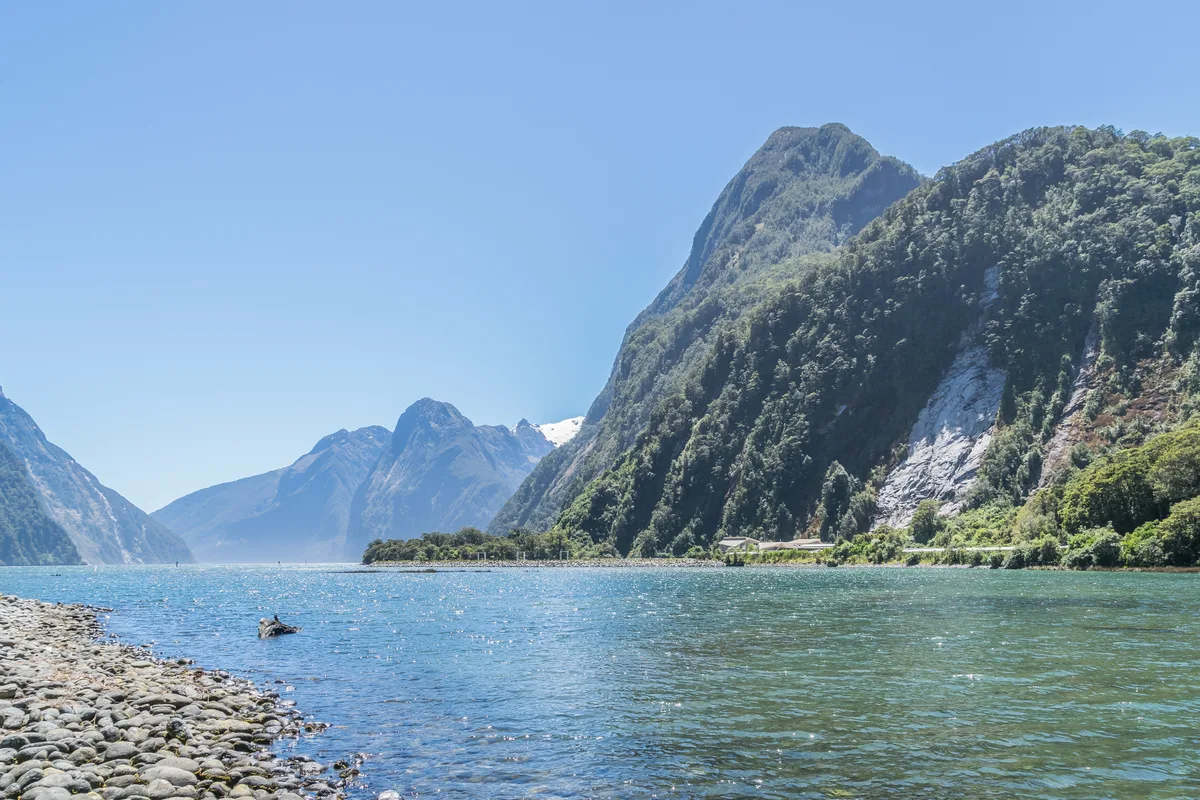
Milford Sound / Piopiotahi, Fiordland. Regional sightseeing photograph; not a photograph of every activity in the guide.
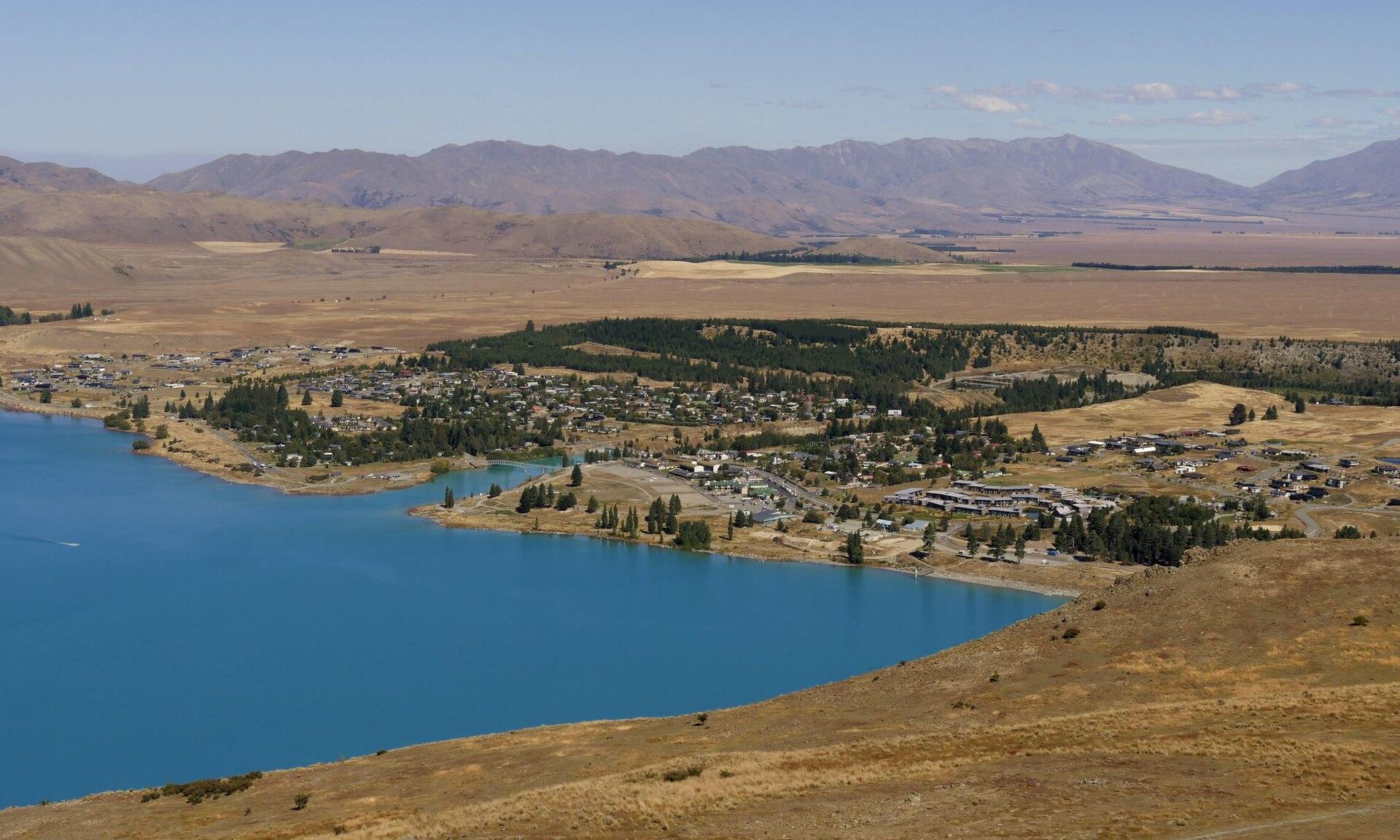
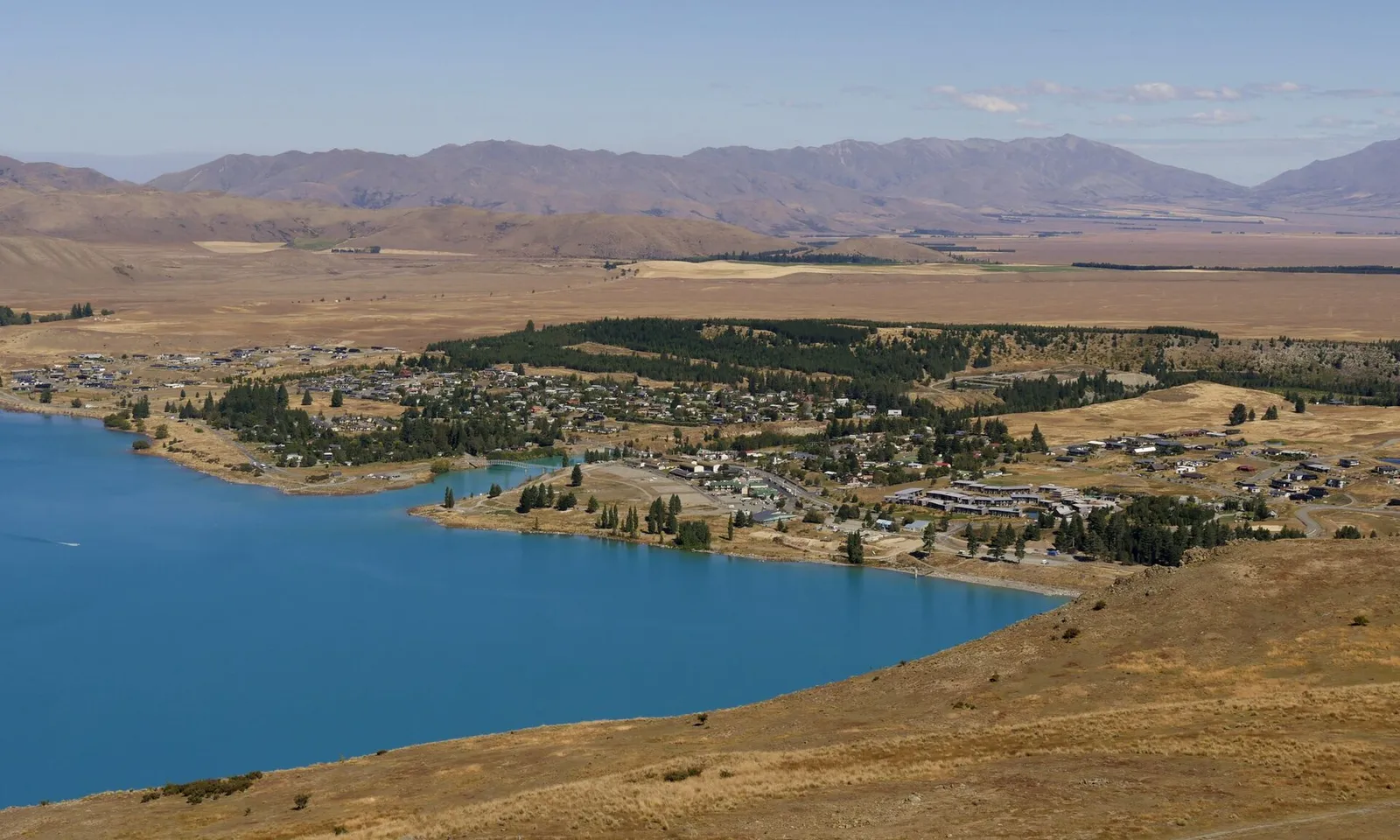
Photo: Krzysztof Golik / CC BY-SA 4.0 / DetailsArea context. Lake Tekapo township and its lakeshore, viewed from Mount John. Destination context only, not a verified campground view. Photographed 2015-02-15.
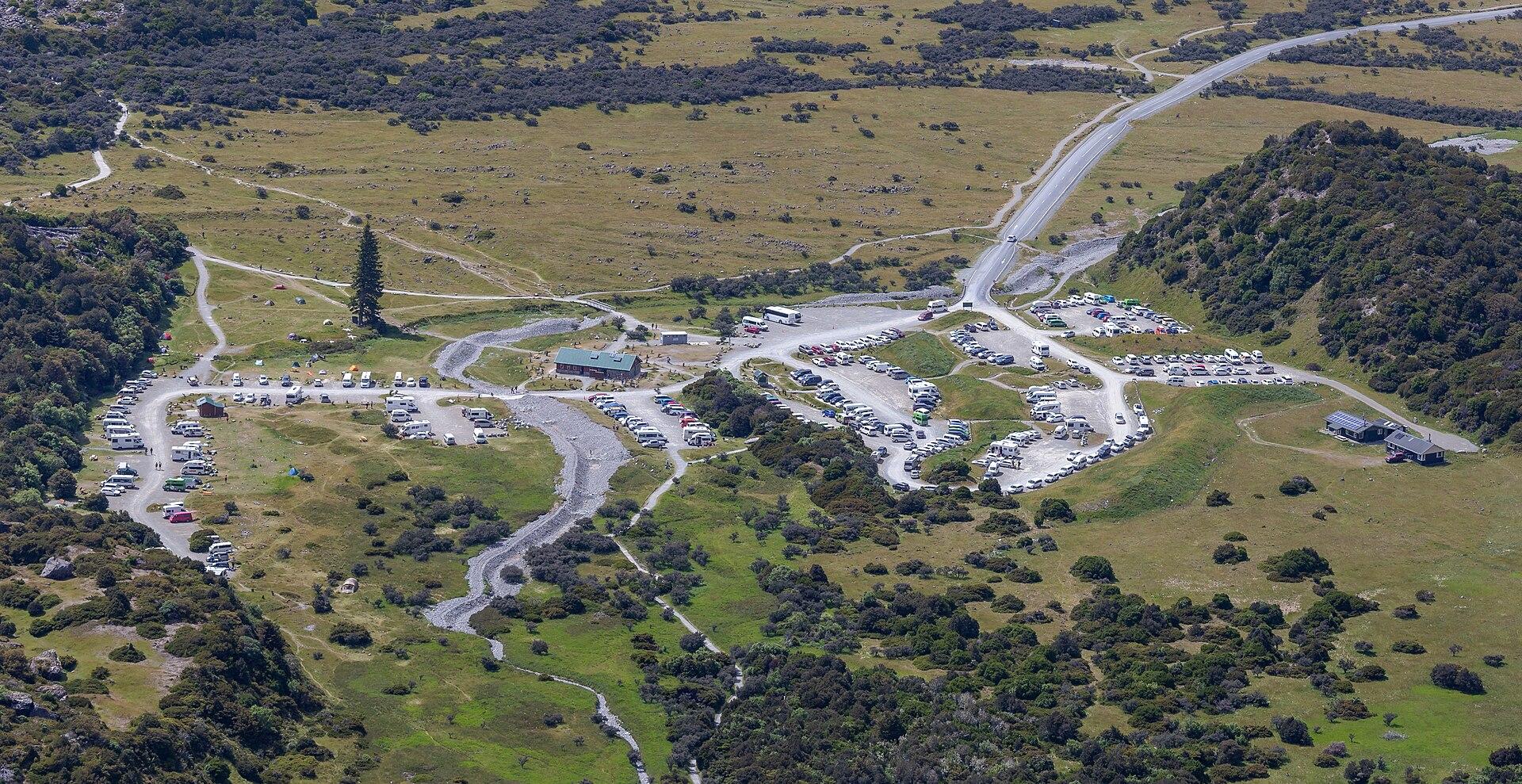
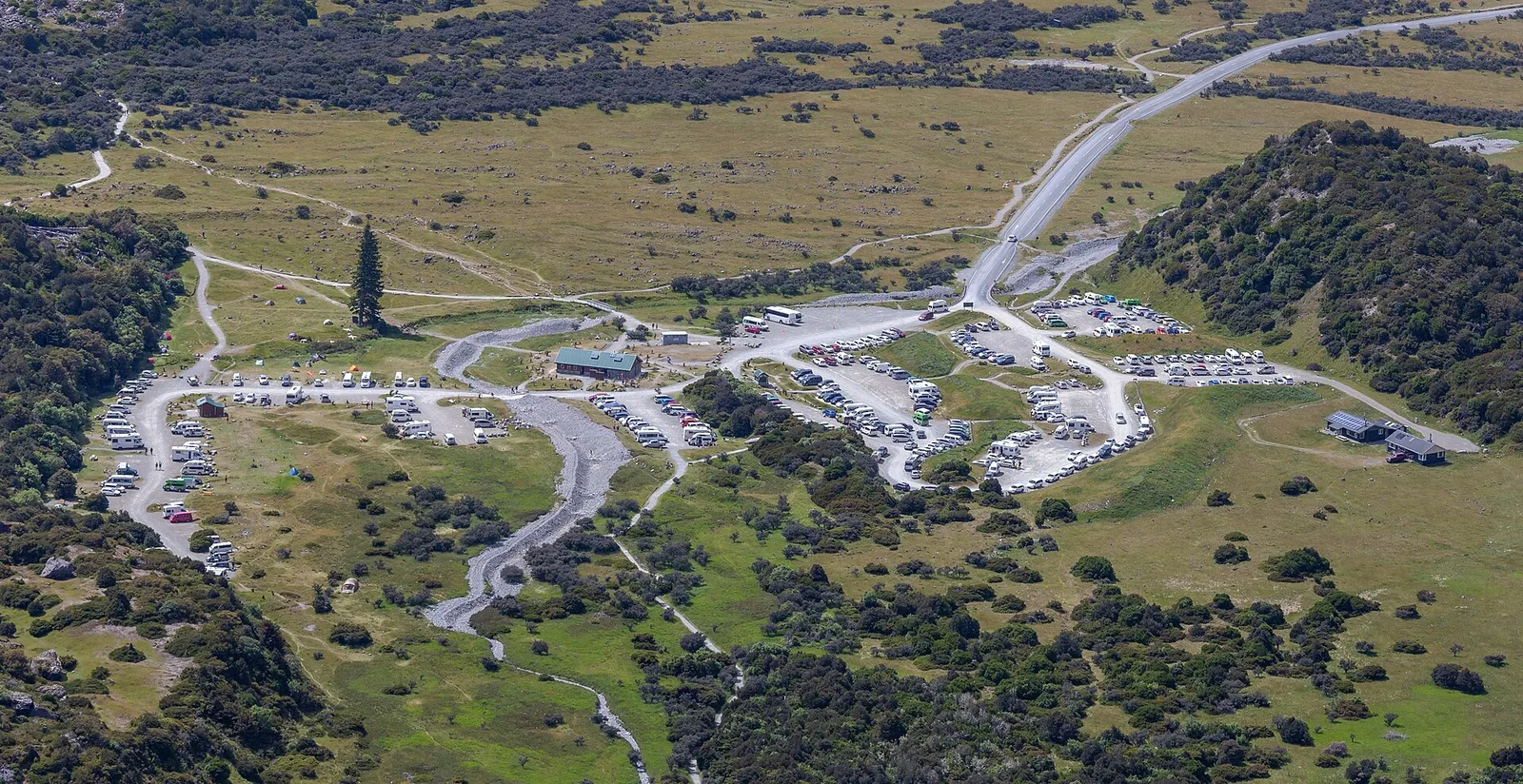
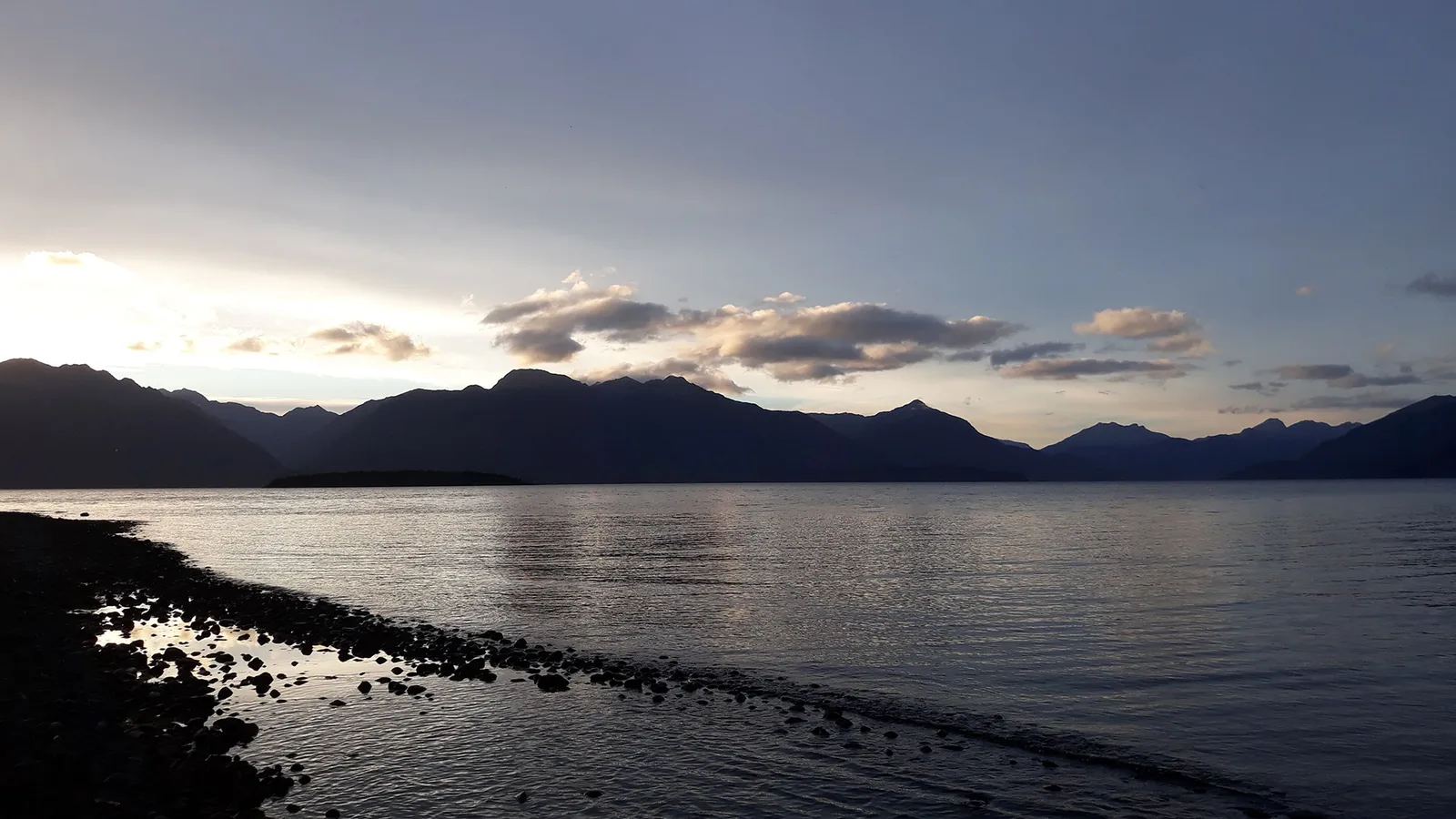
Photo: Ulrich Lange, Bochum, Germany / CC BY 3.0 / DetailsArea context. The lake outlook from Henry Creek Campsite, as identified by DOC. Surrounding scenery only: camping pitches are not visible. Photograph date not supplied.
Photo: Samm Bell / Department of Conservation (NZ) / CC BY 4.0 / DetailsFrequently asked questions
Is the main ten-day trip a Christchurch return loop?
No. The main ten-day route ends in Queenstown. Choose the seven-day inland loop or the fourteen-day return plan if the vehicle must return to Christchurch.
Can we visit Milford Sound and continue to Queenstown that night?
The plan returns to the same Te Anau base. The Milford road alone is approximately 240 km and four hours return before sightseeing and activity check-in.
Can I book Lake Poaka as my guaranteed backup?
No. DOC currently lists Lake Poaka as first come, first served. Keep a confirmed alternative and check access before changing the overnight base.
Does a dog-friendly campground make all these walks dog friendly?
No. DOC prohibits dogs on Kea Point, the main national-park walks and the Kepler Track. Check each walk separately and redesign the itinerary if travelling with a dog.
Sources & official links
- 1.Getting Here & Around (checked 29 October 2026)— Mackenzie Region
- 2.Visit Lake Pukaki (checked 29 October 2026)— Mackenzie Region New Zealand
- 3.Kea Point Track: official route information (checked 29 October 2026)— Department of Conservation
- 4.Journey Planner (checked 29 October 2026)— NZ Transport Agency Waka Kotahi
- 5.Severe weather warnings (checked 29 October 2026)— MetService
- 6.Land Safety Code (checked 29 October 2026)— Department of Conservation
- 7.Booking and paying for a DOC campsite (checked 29 October 2026)— Department of Conservation
- 8.Live charging map and network FAQ (checked 29 October 2026)— ChargeNet
- 9.Mobile coverage map and limitations (checked 29 October 2026)— One New Zealand
- 10.Aoraki EOTC: time and distance tables (checked 29 October 2026)— Department of Conservation
- 11.Lake Poaka Campsite (checked 29 October 2026)— Department of Conservation
- 12.Operator current accommodation and address (checked 29 October 2026)— www.lakerua.co.nz
- 13.Operator camping and current notices (checked 29 October 2026)— lakesedgeholidaypark.co.nz
- 14.Operator website (checked 29 October 2026)— twizelholidaypark.co.nz
- 15.Hooker Valley Track (checked 29 October 2026)— Department of Conservation
- 16.Peninsula Trail: local trails, lambing closure and dogs (checked 29 October 2026)— Tekapo Trails
- 17.Pukaki Kettle Hole Track: official route information (checked 29 October 2026)— Department of Conservation
- 18.Bob's Cove Track and Nature Walk (checked 29 October 2026)— Department of Conservation
- 19.Driving to Wanaka (checked 29 October 2026)— Lake Wanaka Tourism
- 20.Waterfall Creek Track (checked 29 October 2026)— Lake Wanaka Tourism
- 21.Roys Peak Track: lambing closure (checked 29 October 2026)— Department of Conservation
- 22.Albert Town official campground information and FAQ (checked 29 October 2026)— hampshireholidayparks.co.nz
- 23.DOC supplement: Boundary Creek Campsite (checked 29 October 2026)— Department of Conservation
- 24.Moke Lake Campsite (checked 29 October 2026)— Department of Conservation
- 25.Queenstown Lakeview official park information (checked 29 October 2026)— hampshireholidayparks.co.nz
- 26.Twelve Mile Delta Campsite (checked 29 October 2026)— Department of Conservation
- 27.Tasman Wanaka official park information (checked 29 October 2026)— tasmanholidayparks.com
- 28.Mount Iron Track (checked 29 October 2026)— Department of Conservation
- 29.Getting to Fiordland (checked 29 October 2026)— Visit Fiordland / Great South
- 30.Mirror Lakes Walk: official route information (checked 29 October 2026)— Department of Conservation
- 31.Kepler Track: Carpark to Dock Bay and Brod Bay (checked 29 October 2026)— Department of Conservation
- 32.Milford Sound hazards and risks (checked 29 October 2026)— Milford Sound Tourism
- 33.Kepler Track (checked 29 October 2026)— Department of Conservation
- 34.Henry Creek Campsite (checked 29 October 2026)— Department of Conservation
- 35.Operator lakeview camping and accommodation (checked 29 October 2026)— teanauholidaypark.co.nz
- 36.Te Anau TOP 10 Holiday Park official park information (checked 29 October 2026)— top10.co.nz
- 37.Walking track categories (checked 29 October 2026)— Department of Conservation
- 38.Nature and Heritage Itinerary: Christchurch to Tekapo (checked 29 October 2026)— Tourism New Zealand
- 39.Christchurch official park information (checked 29 October 2026)— tasmanholidayparks.com
- 40.Christchurch Spencer Beach TOP 10 Holiday Park official park information (checked 29 October 2026)— top10.co.nz
- 41.Ferry timetable and check-in (checked 29 October 2026)— Interislander
- 42.DOC alerts for White Horse Hill and Hooker Valley (checked 29 October 2026)— Department of Conservation
- 43.Operator accommodation and visitor information (checked 29 October 2026)— www.glentanner.co.nz