By Outdoor Next Editorial standards
On this page
Key facts
- Guide type
- Shared-hut conduct and first-stay preparation
- Booking
- Check the individual hut; not all operate the same way
- Cooking
- Use the designated area and follow ventilation and appliance instructions
- Hut book
- Record your party and onward intentions
- Waste
- Take rubbish, recycling and food scraps out
Checked against official sources on 24 September 2026. Confirm with the official source before you go.
Good hut etiquette means arriving prepared, sharing space considerately and leaving the place ready for the next visitors. Check the hut's booking and facility information before planning what to carry. This guide introduces DOC hut stays; it is not a route guide, a booking confirmation or a full overnight packing list.
Resolve bookings before the walk
Read the individual hut listing and DOC's booking guidance. A ticket or pass is not automatically a reservation, and a hut may use a different process from the one you visited previously. Save the required proof before leaving internet coverage.
Do not plan on finding an unoccupied bunk simply because the hut looks quiet in photographs. Work out a suitable contingency for a non-bookable stay before the trip. Nor should a hut booking persuade you to continue on a route that is no longer suitable for the weather or your group.
Use MSC's multiday planning guidance for the journey, overnight equipment and emergency preparation. Hut etiquette starts with being able to look after your own needs, rather than assuming other visitors will have spare food or equipment.
Arrive without taking over
Say hello, read the hut notices and find out how the shared spaces are being used before spreading out your gear. DOC's practical hut advice encourages keeping muddy boots out and leaving room for other visitors.
Treat bunks, benches and drying space as shared resources, not an extension of your pack. Keep what you need together, and put equipment away after using it. If someone is trying to prepare dinner, that is a good moment to move your unpacking elsewhere.
| Shared space | A considerate habit |
|---|---|
| Entrance | Keep your pack and footwear out of the way |
| Bunkroom | Contain your belongings in your own space |
| Cooking bench | Prepare what you need, then clear and clean it |
| Table | Leave room for others to eat or plan |
| Drying area | Ask before moving someone else's gear |
Speak directly and politely when an arrangement is not working. A simple request to share a bench is more useful than silently moving another person's belongings. If a warden is present, follow their instructions and ask when uncertain.
Cook with care and check the water
Use the designated cooking area and follow both hut notices and your appliance instructions. MSC's fire-safety guidance calls for good ventilation, a stable non-flammable cooking surface and supervision. Keep people and loose gear clear of the cooker.
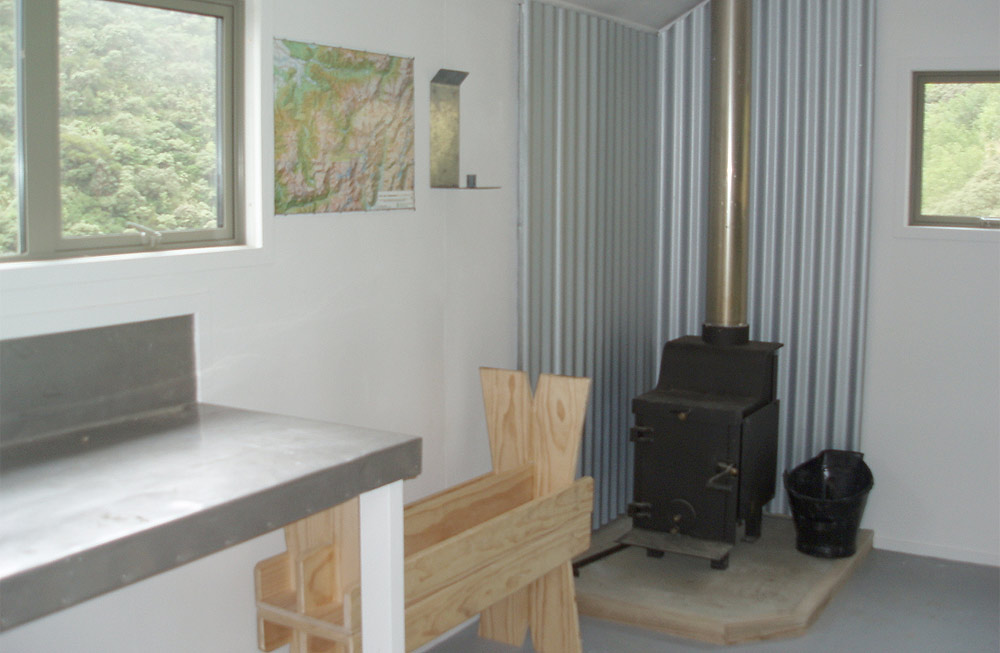
Follow the wood-burner's posted instructions, use wood sparingly and do not leave a fire unattended. DOC's fireplace guidance warns against handling recently used ashes because they may still be hot. A warm hut does not remove the need to carry an appropriate sleeping setup.
For drinking water, check the hut's notices and MSC's water advice. Tank water is not automatically safe untreated. Prepare for the supply described in the listing rather than relying on what another visitor did last time.
Make the hut book useful
Fill in the hut book with a clear onward route, even if your stay was booked online. DOC explains that these entries help search and rescue and are useful from visitors passing through as well as those staying overnight.
Record the requested party and date details, then name the route and intended destination clearly. "Heading out" is less helpful than identifying which track and road end you intend to use. Read recent entries for relevant observations, while treating them as other visitors' reports rather than official instructions.
The book complements, not replaces, intentions left with a trusted contact. That person should know your plan and when to seek help if you do not return. Update them when plans change and when the trip is finished.
Keep evenings and departures considerate
Prepare for an early start before others settle down: organise breakfast, locate your head torch and gather the items you will need first. Keep conversation and lights considerate when people are sleeping. Do not assume everyone shares your timetable.
DOC's hut-user guidance prohibits smoking and vaping inside huts and does not allow dogs inside. Dog access to the surrounding area must be checked separately.
Take all rubbish, recycling and food scraps away when you leave. Do not leave unwanted provisions as a favour for an unknown future visitor. Sweep and tidy the spaces you used, and follow the hut's closing instructions.
Before you go
- Confirm the hut's booking, payment and facility details.
- Prepare for the route and an unexpected delay, not just the bunkroom.
- Carry your own food, appropriate sleeping gear and required cooking equipment.
- Share your intentions and agreed alarm time with a trusted contact.
- Pack bags to take all waste home.
- Allow time to record your onward plan and clean up before leaving the hut.
Frequently asked questions
Does a hut ticket reserve a bunk?
No. DOC distinguishes bookings from payment with tickets or passes. Check the individual hut's process; Backcountry Hut Tickets cannot be used to pay for bookings, and non-bookable huts operate first come, first served.
Do I need to fill in the hut book if I booked online?
Yes. DOC encourages everyone passing a hut to record their intentions, including booked visitors and people not staying overnight. Give a clear onward route, not just a vague destination.
Can dogs sleep inside DOC huts?
No. DOC does not allow dogs inside huts. Check the area's dog-access rules separately before planning any trip with a dog.
Can I leave spare food for the next visitors?
Do not leave food behind as an assumed gift. DOC asks hut visitors to take all rubbish, recycling and food scraps out. Plan your own provisions rather than relying on leftovers.
Sources & official links
- 1.How to be a low impact hut user— Department of Conservation
- 2.Booking and paying for huts— Department of Conservation
- 3.Six ways you can be the best hut guest— Department of Conservation
- 4.What's up with those Hut Books?— Department of Conservation
- 5.Fire Safety— NZ Mountain Safety Council
- 6.Winter warmers: fireplace etiquette— Department of Conservation
- 7.Drinking Water— NZ Mountain Safety Council
- 8.Leaving Trip Intentions— NZ Mountain Safety Council
- 9.Multiday Tramping— NZ Mountain Safety Council