New Zealand Camping Checklist
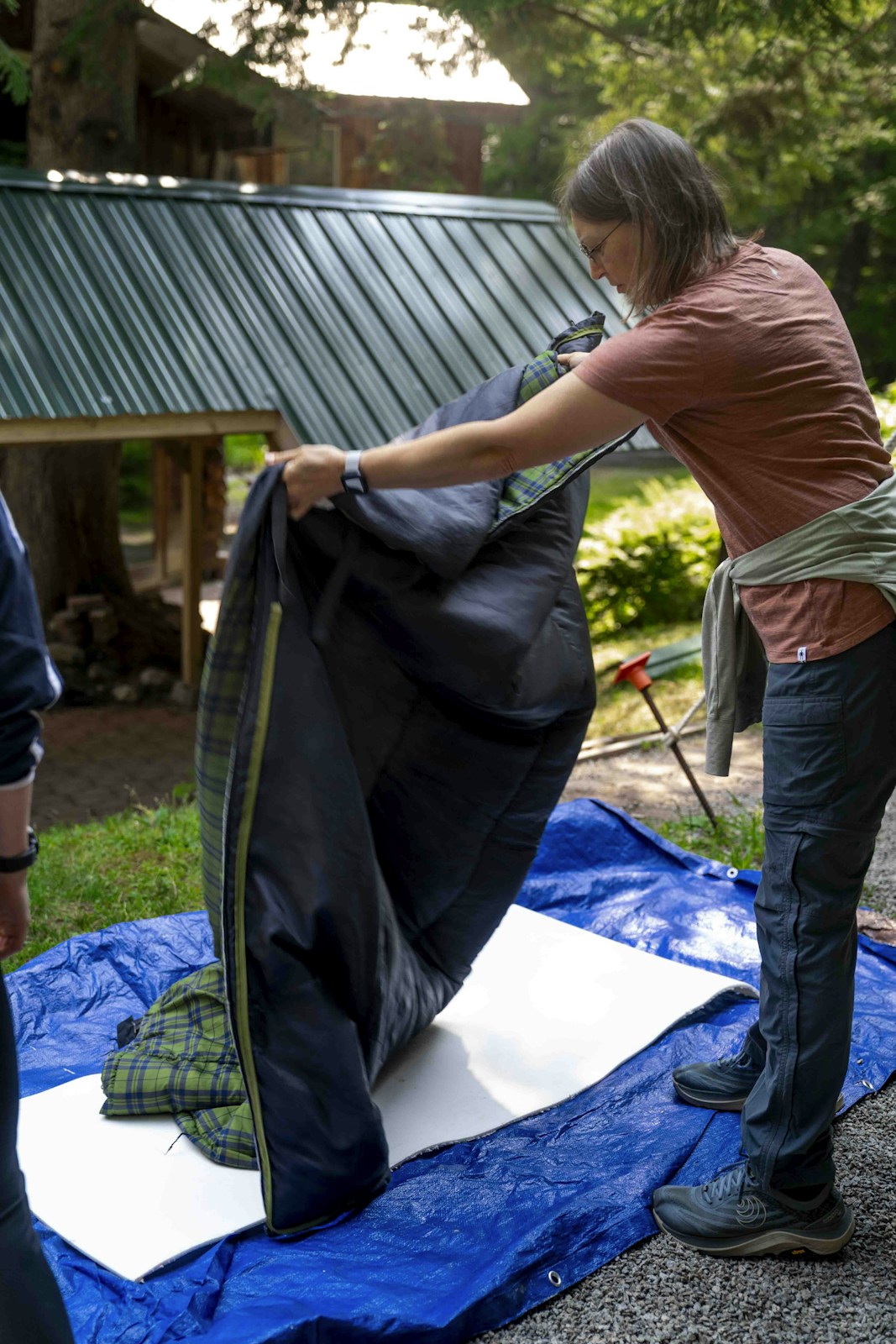
Illustrative photograph. Preparing a sleeping bag and mat outdoors; location and temperature rating are unverified.
Photo: Frederick Shaw / Unsplash License / DetailsUse this NZ camping checklist for shelter, bedding, cooking, water, clothing and safety, with family, road-trip and walk-in additions plus a final check.
Last checked 12 October 2026 / By Outdoor Next / Editorial standards
On this page
Build your camping checklist around the site, weather and activities, then check the equipment you actually own. A serviced stay beside the car and a walk-in trip need different preparation. Use the interactive packing list alongside this guide to track your own kit.
This checklist was source-checked on 12 October 2026 against DOC's camping equipment advice and the safety sources below. The tables are a working list to adapt, not proof that every trip is covered. Assign shared items to a person and check them physically before departure.
Confirm the campsite first
Before packing, establish what the site provides and what it expects you to bring. Check vehicle access, booking and arrival instructions, toilets, drinking water and waste facilities. Our campsite selection guide covers these decisions.
Do not assume a tap supplies treated water. DOC's campsite guidance distinguishes treated and untreated supplies. Plan water for drinking, cooking and washing, with extra for your activities and a backup if a refill is unavailable. Check current notices rather than assuming the usual facilities are operating.
| Trip information | Keep accessible |
|---|---|
| Overnight stay | Booking confirmation, dates, address or access instructions and arrival rules |
| Facilities | Water advice, toilets, rubbish arrangements and any power requirements |
| Alternatives | Another lawful overnight option and a route you can change |
| Shared plan | Group contacts, trip intentions and relevant medication or allergy plans |
Shelter and sleep
| Category | Check before packing |
|---|---|
| Shelter | Tent, complete poles, pegs, guy lines and suitable repair items |
| Ground protection | Compatible footprint if used; do not leave it collecting runoff |
| Bedding | Bag suitable for expected overnight conditions |
| Ground insulation | Suitable mat, checked for leaks, with repair supplies |
| Dry storage | Protection for bedding and spare clothing |
Pitch the tent before departure. Check that every component belongs to the model and that the occupants and mats fit. Use the tent guide, camping mat guide and sleeping-bag guide where the specifications are unclear. Test an inflatable mat before packing it for a remote stay.
Food and cooking
Plan meals and drinking water before deciding how much fuel to carry. Pack the compatible stove, fuel, ignition, pot, utensils and washing equipment. Add rubbish bags and storage for food.
Carry food that does not require cooking in case the conditions or site restrictions rule out using the stove. Read the stove guide and DOC fire guidance before departure. Portable camping stoves belong outdoors, not in a tent or vestibule; WorkSafe warns about carbon monoxide in confined spaces.
| Kitchen item | Check |
|---|---|
| Stove and fuel | Correct connection, condition, fuel type and enough for planned meals |
| Ignition and cookware | Working ignition or compatible backup; pots suitable for the appliance |
| Meals | Ingredients, snacks, uncooked backup food and group dietary needs |
| Water | Filled containers, known refill plan and suitable treatment if needed |
| Cleaning and waste | Washing supplies, rubbish bags and a plan to take waste out |
For shared meals, assign the stove, pot and fuel to named people so essentials are neither missing nor unnecessarily duplicated.
Clothing and personal items
Pack waterproof outer layers, insulation, dry sleeping clothes, suitable footwear and spare socks. Include sun protection, a warm hat and any personal medication or hygiene items you need. Keep a dry change separate from the clothes you use while travelling.
MSC's equipment guidance recommends sturdy footwear and warm layers, including a hat and gloves for tramping even in summer. Add a towel, toiletries, toilet paper where needed and suitable repellent. Our sandfly guide covers product-label checks and clothing without prescribing a medicine kit.
Do not remove warm layers simply because the trip is in summer. Choose equipment for the actual forecast and exposure. For wet conditions, see camping in the rain.
Safety and communication
DOC's Land Safety Code calls for suitable trip choice, weather checks, spare food and warm clothes, shared intentions and ways to get help.
Pack a headtorch, appropriate first aid supplies, navigation and communication equipment, and charging or battery backups. For a remote trip, consider how you would raise an alarm without mobile reception. Tell a trusted person your route and when to act if you do not return.
A campsite list is not a walking list. Pack for the day's route using the day-hike packing guide, even when the main camp remains beside your vehicle.
Add only what your trip needs
| Trip type | Add or check | Keep this boundary clear |
|---|---|---|
| Family camping | Each child's bedding, spare clothing, personal supplies and a workable bedtime layout | A larger tent does not replace supervision or a suitable campsite. |
| Road trip | Accessible arrival bag, saved booking details, charging cables and wet-gear storage | Keep essentials reachable without unloading the whole vehicle. |
| Walk-in camping | Complete carried load, pack liner, navigation, communications and compatible repair items | Car-camping bulk and a walking kit are not interchangeable. |
| Multi-night basecamp | Food storage, resupply plan and a separate ready-to-go walking pack | Do not leave the safety kit at camp when going for a walk. |
For families, trial the beds inside the family tent and decide which adult handles setup while children are supervised. For a road trip, use the North Island or South Island itinerary to identify each night's facilities before adding extra equipment.
If using a DOC Campsite Pass, carry it and the required booking evidence. A pass does not replace a reservation or make an excluded campsite eligible.
Before you leave
- Confirm campsite access, facilities and weather.
- Test shelter, bedding and cooking equipment.
- Plan water, food and waste disposal.
- Check each shared item against its named owner and each person's bedding against the actual packing.
- Check freedom camping rules if relevant.
- Share intentions and arrange a backup plan.
- Recheck the packing list with everyone travelling.
Sources & official links
- Land Safety Code (Department of Conservation)
- Campsite categories: facilities and fees (Department of Conservation)
- Lighting fires on public conservation land (Department of Conservation)
- Camping gear list (Department of Conservation)
- Camping appliance safety (WorkSafe New Zealand)
- Clothing and equipment (New Zealand Mountain Safety Council)
Frequently asked questions
How much water should I take?
Plan for drinking, meals, washing, activity, weather and the distance to a reliable refill. There is no single daily amount that suits every group or trip.
Can I drink campsite water?
Check the site's current water advice. DOC says supplies at its campsites may be untreated; follow its treatment instructions and carry a backup.
What changes for a walking trip?
Reassess carrying weight, navigation, warm and waterproof layers, emergency shelter and communication. Use a day-hike or overnight-walk list as well as the camp list.
Is there a printable camping checklist?
Use the category tables and departure checks below as a print-friendly working list, or track your own items with the linked packing-list tool. Add equipment for your actual campsite, group and activities.
Equipment directory
Keep planning