Sleeping Bag Temperature Ratings Explained
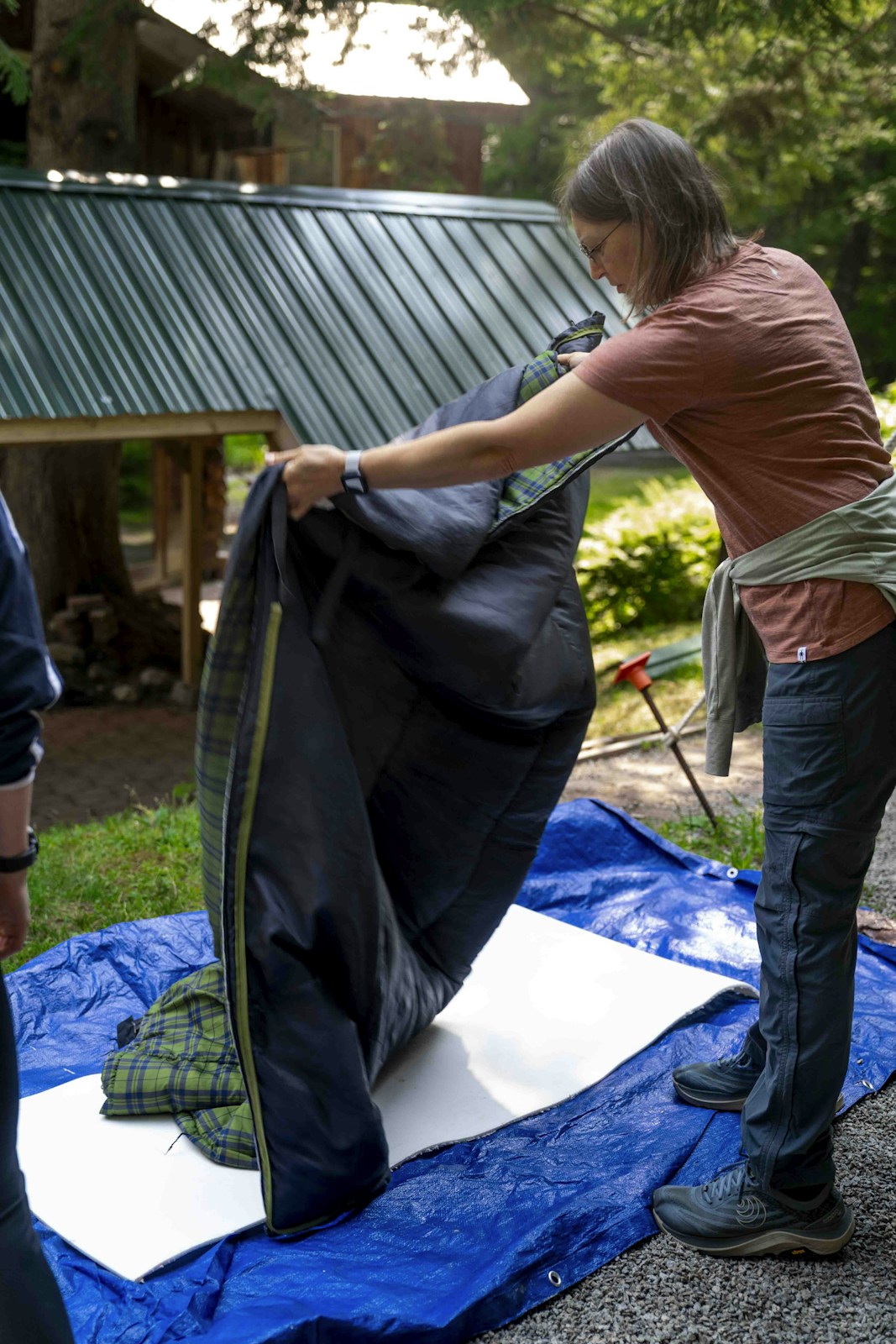
Illustrative photograph. Preparing a sleeping bag and mat outdoors; location and temperature rating are unverified.
Photo: Frederick Shaw / Unsplash License / DetailsUnderstand comfort, limit and extreme sleeping bag ratings, then match your bag, mat and dry clothing to the campsite and overnight forecast.
Last checked 24 September 2026 / By Outdoor Next / Editorial standards
On this page
A sleeping bag's comfort rating is a useful comparison point, not a guarantee that you will be warm. Choose for the overnight conditions at your campsite and consider the sleeping mat, shelter and dry clothing as one system. Never use the extreme rating as the target for a planned night's sleep.
Comfort, limit and extreme
Manufacturers may publish several temperatures for the same bag. Before comparing products, check whether the figures use the same test method and which figure appears in the product name.
| Rating | How to use it |
|---|---|
| Comfort | A starting point for choosing a bag, especially if you sleep cold |
| Limit | A lower test threshold, not equivalent to comfortable sleep for everyone |
| Extreme | Emergency-only territory, not a normal operating temperature |
Therm-a-Rest's EN/ISO explanation makes clear that the extreme range involves a risk of hypothermia. A bag labelled with a very low number is not necessarily a comfortable choice at that temperature.
Laboratory reference sleepers are not individual predictions. Your fit, clothing, fatigue and the environment affect the result. Ask the manufacturer which figure is being advertised when the label is unclear.
Choose for a place, not an island
There is no single sleeping-bag temperature that covers a New Zealand summer. NIWA's climate overview describes strong differences between coastal, inland and mountain climates. A regional average is not a campsite's overnight forecast.
Check the elevation and forecast for your actual stop. Allow a margin for colder conditions and for your own experience of sleeping outdoors. Someone who routinely sleeps cold should not choose the same minimum rating as someone who has comfortably used a comparable system before.
For a first trip, choose an accessible campsite where you can leave or change accommodation if the setup is unsuitable.
Include the mat
A warmer bag cannot be judged separately from what is beneath it. Compare the mat's insulation information and intended conditions as well as its thickness and comfort. An air mattress chosen for cushioning alone may not provide the insulation you need.
Test the combination before relying on it somewhere remote. Check for leaks, take an appropriate repair kit and make sure the mat fits inside the tent without compressing the sleeping bag against wet walls.
Fit, fill and keeping bedding dry
Try the bag with the clothing you expect to wear. You should be able to move without compressing its insulation or leaving large uncomfortable gaps around the shoulders. Length, hood adjustment and zip access matter as well as the temperature label.
Compare down and synthetic models using their tested warmth, packed size, weight, care requirements and cost. Do not treat either fill as permission to let the bag get wet. Pack bedding in waterproof storage and keep wet clothing separate.
Follow the manufacturer's washing, drying and storage instructions. Check the bag's condition before departure, especially if it has been stored compressed or damp.
Before you go
- Check the exact campsite forecast and choose a suitable comfort rating.
- Confirm the mat's insulation and check for leaks.
- Pack dry sleeping layers and protect bedding from rain.
- Plan an exit or alternative accommodation if conditions exceed your system.
- Use the camping checklist and packing tool to check the complete kit.
Sources & official links
- Sleeping bag temperature ratings: EN/ISO ratings (Therm-a-Rest / Cascade Designs)
- Overview of New Zealand's climate (Earth Sciences New Zealand / NIWA)
Frequently asked questions
Which sleeping bag rating should I use?
Start with the comfort rating and allow for your own cold sensitivity and the conditions. Check which testing method the manufacturer used.
Is the extreme rating safe for a planned trip?
No. Therm-a-Rest's EN/ISO explanation identifies a risk of hypothermia in the extreme range. Do not plan to sleep at that rating.
Does the sleeping mat matter?
Yes. The insulation beneath you is part of the sleep system. Check the mat's intended conditions and insulation rating alongside the bag.
Is there one temperature rating for summer in New Zealand?
No. Use the specific campsite, elevation and forecast, with a margin for uncertainty and personal needs.
Equipment directory
Keep planning