Family Tents NZ: Choose Space, Layout and a Practical Pitch
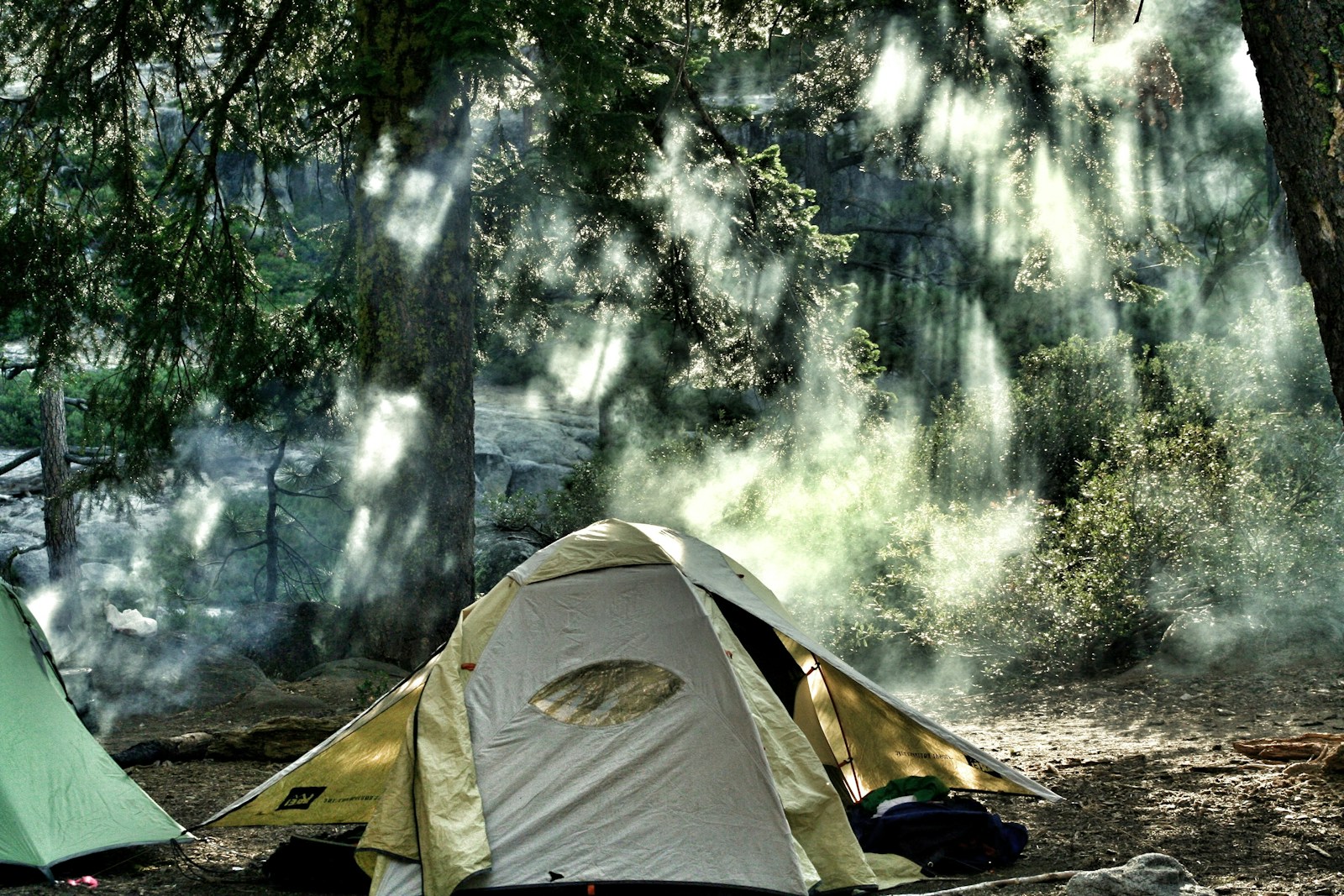
Illustrative photograph. General outdoor planning photograph, not a photograph of a named route, campsite, product or the itinerary. Pitched tents in Yosemite Valley, United States, not a New Zealand campsite or a pitching demonstration.
Photo: Andrew Scofield / Unsplash License / DetailsCompare family tents for New Zealand car camping using real bedding layouts, campsite footprint, ventilation and pitching needs, with sourced NZ examples.
Last checked 12 October 2026 / By Outdoor Next / Editorial standards
On this page
Choose a family tent around your actual beds and campsite, not the largest capacity label. For New Zealand car camping, the useful questions are whether everyone can sleep, get changed and leave the tent comfortably, and whether your group can pitch it securely. The examples below are specification research checked on 12 October 2026, not field-tested rankings.
Measure the family before comparing tents
Lay out the sleeping mats, stretchers or mattresses you plan to use, with pillows and bags. Measure the arrangement, then compare it with the bedroom floor plan rather than the tent's overall dimensions. A tall stretcher can meet a sloping wall long before a mat on the floor does.
Decide how bedtime will work. A separate living area can matter more than extra nominal sleeping places. Ask whether an adult can sit away from a sleeping child, whether wet clothes have somewhere separate to go, and whether a toilet trip requires stepping over another bed. Treat a divider as a layout feature, not a promise of soundproofing.
| Decision | What to check |
|---|---|
| Beds and occupants | Usable bedroom length, width and wall slope with your own bedding |
| Shared space | Room to sit or change without blocking exits |
| Privacy | Bedroom arrangement, divider position and access |
| Insect protection | Mesh coverage, zip condition and ventilation with doors closed |
| Campsite fit | Fly, porch, awnings and guy lines, not just the bedroom |
| Vehicle fit | Packed bag dimensions, weight and space left for other equipment |
Compare camping mats before buying a wider tent simply to accommodate bedding you have not yet chosen.
Source-backed family tent examples
These existing catalogue entries illustrate different layouts. Check the linked manufacturer's current model and floor plan before buying; similar names and later versions need not have identical specifications.
| Catalogue example | Published specification | Decision it helps you explore |
|---|---|---|
| Zempire Aerospeed 6 | Zempire lists comfort occupancy of four, maximum six, one sleeping area and 10.8 kg weight. | A shared sleeping area; do not equate the six-person maximum with six large beds and living room. |
| Zempire Evo TM V2 | Zempire lists comfort occupancy of four, maximum six, a dividing curtain and a 4.9 square metre living area. | Whether separation and living space justify a larger pitch and packed load. |
| Kathmandu Retreat 280 | Kathmandu lists four-to-five-person capacity, 24.70 kg weight and external dimensions of 600 by 275 by 195 cm. | Whether a poled family shelter fits your transport and campsite, before adding guy-line clearance. |
Sources: Aerospeed 6, Evo TM V2 and Retreat 280. These are examples, not a complete market shortlist or a statement that any model is available for your dates.
Inflatable versus poled: compare the whole setup
Compare the full pitched footprint and packed kit before choosing an inflatable or poled tent. For air-beam models, establish which pump, pressure procedure and repair parts the manufacturer specifies. For poled models, identify the pole sequence and the person needed to support each stage. Both need the prescribed anchoring and guy lines.
Practise with the adults who will actually be present, while accounting for someone supervising children. Do not use a manufacturer's inflation time as your arrival-to-ready-camp time: unloading, positioning, pegging, guying and bedding still need attention.
Ask about replacement parts for the exact version. A practical repair question is more useful than assuming that one structure type is always more durable.
Match shelter to weather and facilities
MSR explains why a fabric waterproof rating is only part of tent selection. Check seams, floor construction, ventilation and intended use together. Our general tent guide covers those trade-offs without assigning a universal NZ waterproof threshold.
Choose a campsite and forecast within the group's capability, following the Land Safety Code. Include access to toilets, water and an alternative overnight stay in your plan. A larger shelter is not a reason to remain at an unsuitable exposed site.
Keep cooking outside the tent and vestibule, even when a porch looks spacious. WorkSafe warns about carbon monoxide and gas-appliance use in confined spaces. Use compatible equipment outdoors according to its instructions, with children kept clear.
Before you buy or go
- Trial the sleeping layout and check every exit remains usable.
- Confirm the campground accepts the complete pitched footprint.
- Check packed kit fits the vehicle and can be handled by your group.
- Practise pitching and inspect poles or air tubes, pegs, zips and mesh.
- Use the family camping advice and packing checklist for the rest of the stay.
Sources & official links
- Aerospeed 6 Air Tent: floor plan and specifications (Zempire NZ)
- Evo TM V2 Air Tent: layout and specifications (Zempire NZ)
- Retreat 280 4-5 Person Tent: product details (Kathmandu NZ)
- Tent fabric specifications and waterproof ratings (MSR / Cascade Designs)
- Land Safety Code (Department of Conservation)
- Camping appliance safety (WorkSafe New Zealand)
Frequently asked questions
What size tent does a family of four need?
There is no universal person-count answer. Compare your four beds, bags, sitting space and exit access with the usable bedroom floor plan, including sloping walls.
Are inflatable tents better for families?
They are an option, not an automatic upgrade. Compare inflation and anchoring steps, pump requirements, air-tube repairs, packed bulk and the ability of your group to pitch the complete shelter.
Can a family tent also be used for tramping?
Only if its complete weight, packed size and intended conditions suit the trip. Large standing-height car-camping tents should not be assumed suitable for carrying on a multi-day walk.
Are these tents field-tested recommendations?
No. These examples illustrate manufacturer specifications checked on 12 October 2026. They are not a comparative field test, a stock check or best-in-test awards.
Keep planning