Camping Mats NZ: Choose Insulation, Comfort and Packed Size
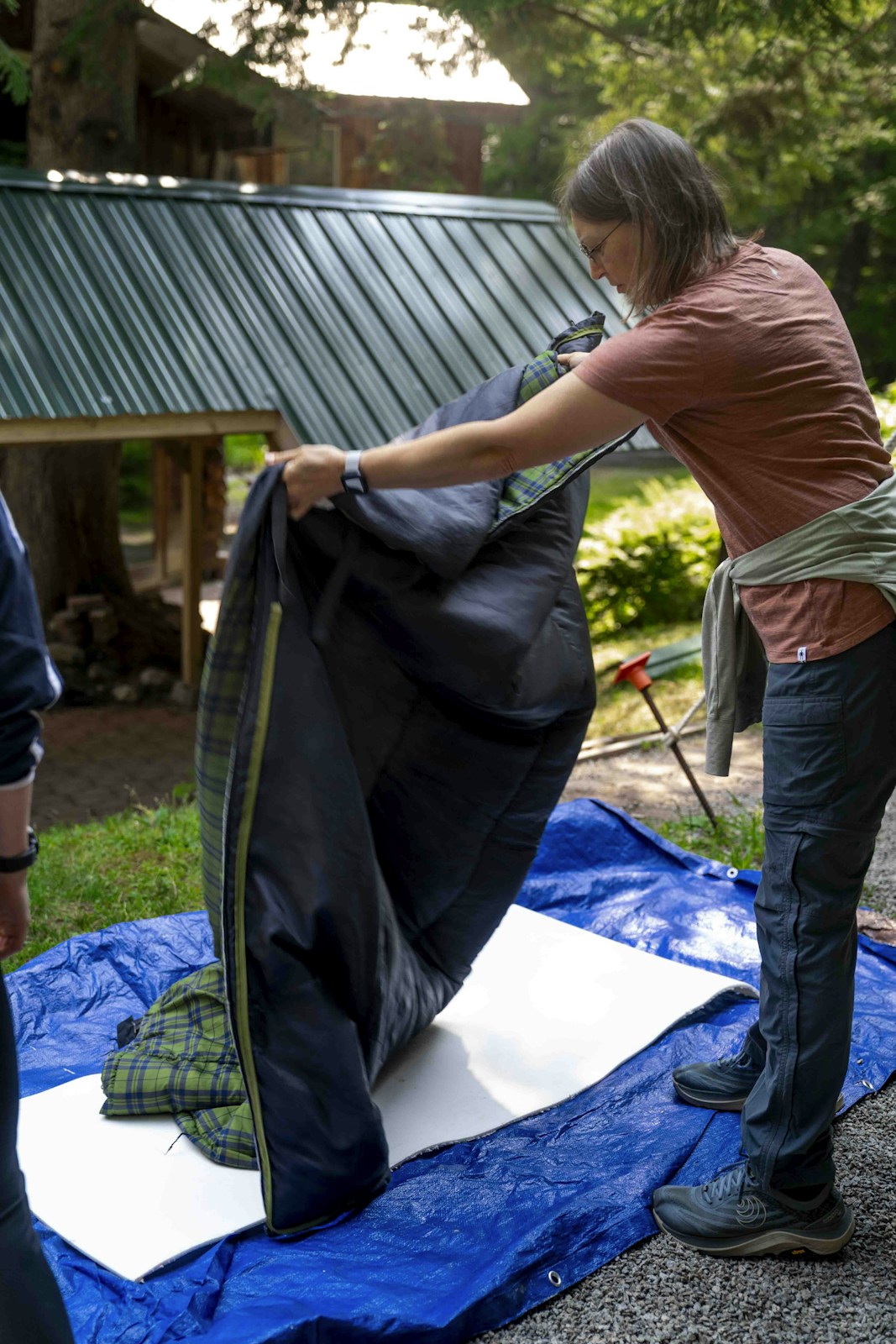
Illustrative photograph. General outdoor planning photograph, not a photograph of a named route, campsite, product or the itinerary. Preparing a sleeping bag and mat outdoors; location and temperature rating are unverified.
Photo: Frederick Shaw / Unsplash License / DetailsFind the best camping mat for your trip by comparing R-value, fit, construction and carried weight. Includes sourced NZ catalogue examples and limits.
Last checked 12 October 2026 / By Outdoor Next / Editorial standards
On this page
Choose a camping mat for ground insulation as well as comfort. The best camping mat for a car-based family stay may be a poor choice to carry on a multi-day tramp, even if both look equally thick. This guide compares decision criteria and manufacturer information checked on 12 October 2026, not results from an Outdoor Next field test.
Understand R-value before comparing thickness
An R-value describes thermal resistance, not a guaranteed minimum sleeping temperature. Therm-a-Rest explains how ground insulation contributes to the sleep system. A mat and sleeping bag have different jobs; do not compare a bag's temperature label with a mat's R-value as if they were interchangeable.
Compare R-values on the same test basis, preferably the ASTM F3340 method. ASTM's standard describes a laboratory thermal-resistance test and explicitly notes that real-world heat loss can differ because of factors such as compression and sleeping posture. A common method makes a comparison more meaningful; it does not reproduce every campsite or sleeper.
Thickness, a four-season label and a temperature claim are not substitutes for knowing how an insulation value was measured. Where the test method is unclear, ask the manufacturer instead of assigning an equivalent R-value yourself.
Start with the trip and sleeping space
| Priority | What to compare |
|---|---|
| Car camping | Comfort in your sleeping position, vehicle storage and handling the packed mat |
| Tramping | Complete carried weight and packed size, alongside insulation and repairability |
| Cold ground | Verified insulation guidance and the whole bag-or-quilt system |
| Side sleeping | Hip and shoulder comfort at the maker's recommended inflation |
| Sharing a tent | Actual mat width and length, tapered ends and access to doors |
| Remote nights | Repair method, valve condition and a contingency if the mat fails |
Check the exact size fits your body, tent and luggage before comparing weight. Two wide mats can exceed a tent's usable bedroom even when its capacity label says two people. Try the layout with the tent inner erected and allow for sloping walls, pillows and bags.
If a double mattress appeals, compare it with separate mats using the same criteria. Decide how it will fit through the door, how you will inflate and pack it, and what a problem with that one shared item would mean for both sleepers.
Foam, self-inflating or insulated air
A closed-cell foam mat avoids an inflatable chamber but still needs adequate insulation and a comfortable thickness for you. Compare its packed bulk with the space available in your luggage, rather than assuming a light item is automatically easy to carry.
A self-inflating mat uses expanding foam within an airtight shell. A fully air-supported insulated mat uses a different construction; check the instructions for inflation, pressure adjustment and repairs. Neither label alone establishes warmth, comfort or ease of use.
Before buying, ask to see the valve and packing procedure. Confirm what comes with the mat, which pump or sack fits it, and what repair supplies suit the material. Do not compare a bare mat weight against another product's complete packed kit without noting the difference.
Two existing catalogue examples
| Product entry | Manufacturer information checked | Selection implication |
|---|---|---|
| Zempire Monstamat Single | Zempire lists a self-inflating design, 198 by 68 by 10 cm open dimensions and 3.21 kg weight. It lists R 10.5. | A car-camping candidate to check against the bedroom and luggage; confirm the R-value test method before making cross-brand insulation comparisons. |
| Sea to Summit Ether Light XR Pro, Regular | Sea to Summit describes an insulated air mat, 10 cm thickness and ASTM-tested R-value of 7.4. | An insulated air construction to assess for the trip; compare the exact Regular size with your own sleeping needs. |
Sources: Zempire specifications and Sea to Summit specifications. The identical listed thickness illustrates why thickness alone is insufficient. It does not prove equal comfort, and the two R-values are not presented as a verified head-to-head test. No price or current availability is asserted.
Trial the complete sleep system
Use your intended sleeping bag or quilt, pillow and sleeping clothes during a practice night. Follow the mat's inflation instructions and check for overnight pressure loss before a trip where replacing it would be difficult.
Keep the sleeping surface clear of sharp items and follow the manufacturer's cleaning and storage instructions. For a puncture or valve problem, use compatible repairs rather than assuming any adhesive will work. Match the tent floor and footprint to their own instructions too.
Before you go
- Recheck the overnight conditions and insulation guidance for the actual model.
- Measure the chosen size against the tent's usable floor.
- Test the mat, valve and pump or inflation sack.
- Pack suitable repairs and consider the consequence of a failure.
- Put bedding and dry sleeping clothes on the camping checklist.
Sources & official links
- F3340: thermal resistance of camping mattresses (ASTM International)
- How warm is my sleeping pad and what is R-value? (Therm-a-Rest / Cascade Designs)
- Monstamat Single: specifications (Zempire NZ)
- Ether Light XR Pro Insulated Air Sleeping Pad: specifications and ASTM testing (Sea to Summit)
Frequently asked questions
What is the best camping mat for New Zealand?
There is no universal winner. Compare expected conditions, verified insulation, sleeping comfort, tent fit, weight and repair options for your actual trip.
Does a thicker mat mean a warmer mat?
No. Thickness describes depth, not thermal resistance. Check the R-value and how it was measured instead of using thickness alone as an insulation rating.
What R-value do I need?
Use the manufacturer's condition guidance, your sleeping bag or quilt, ground conditions and how cold you sleep. R-value is not a direct temperature rating and no one value suits every NZ trip.
Are the examples independently tested here?
No. Product details are manufacturer specifications checked on 12 October 2026, not Outdoor Next comfort, warmth or durability tests.
Equipment directory
Keep planning