By Outdoor Next Editorial standards
On this page
Key facts
- Suggested duration
- 9 days
- Start
- Christchurch
- Finish
- Te Anau
- Travel style
- Road trip
Checked against official sources on 29 October 2026. Confirm with the official source before you go.
A one-way South Island journey with paired lake-country nights, a separate Aoraki visit and a Te Anau finish that does not force Milford Sound into the final day.
This is a suggested itinerary, not a booked package or a guarantee that roads, walks or overnight sites are available.
At a glance
| Planning point | At a glance |
|---|---|
| Route | Christchurch to Te Anau; 9 suggested days |
| Nights | Christchurch, Lake Tekapo, Twizel, Wanaka, Queenstown, Te Anau, Te Anau; optional final night; final night optional if departing |
| Driving | Approx. source-attributed references below; local approaches and sightseeing are additional |
| Camping style | Choose one confirmed site per night; alternatives may change the base or vehicle suitability |
| Flexibility | Swap a walking day or stay put when weather/access is unsuitable |
| Source check | 29 October 2026; live availability and future conditions are not certified |
Day 1: A Christchurch night before heading inland
Driving: local arrival/base day; no compulsory inter-town transfer is added. Calculate your actual depot/campsite approach with the NZTA Journey Planner and allow time to park, settle in and rest.
Begin with a Christchurch overnight so vehicle collection, food shopping and equipment checks do not compete with the inland drive. Confirm the complete accommodation sequence and ask the vehicle provider about the planned one-way finish before committing to departure. Keep the first evening close to your base and prepare tomorrow's lunch. This itinerary ends in Te Anau, not at a rental depot; any later drop-off or return to Christchurch needs a separate, workable arrangement.
Choose one overnight option below. An alternative in another town changes both the daily drive and the following morning; confirm it before travelling.
Overnight: Christchurch
- Christchurch Tasman Holiday Park
- Spencer Beach TOP 10 — coastal alternative
- South Island route planning
- Christchurch-area bases
Day 2: Christchurch through Fairlie to Tekapo
Driving: Christchurch to Lake Tekapo approx. 228 km / 3 hr via SH1 and SH79. Source: Nature and Heritage Itinerary: Christchurch to Tekapo. All figures are approx., one way unless explicitly marked return, before sightseeing, check-in and campground approaches.
Drive towards Lake Tekapo via the checked inland route, with Fairlie as a possible proper rest stop rather than a timed appointment. Give arrival and settling in priority over an evening attraction. If the lakefront weather suits, take a modest local look before dinner and leave larger outings for later. Confirm the next day's Twizel accommodation while there is time to adjust. Avoid using a late arrival to justify parking overnight somewhere that has not been authorised.
Choose one overnight option below. An alternative in another town changes both the daily drive and the following morning; confirm it before travelling.
Overnight: Lake Tekapo
- Lakes Edge Tekapo Holiday Park
- Twizel Holiday Park — different overnight town
- Lake Poaka — DOC; different base near Twizel
- Tekapo Peninsula Walkway: optional short arrival outing
Day 3: Tekapo to a two-night Twizel base
Driving: Tekapo to Twizel approx. 58 km / 40 min in DOC’s table; the regional tourism guide suggests approx. 45 min. Source: Aoraki EOTC: time and distance tables. All figures are approx., one way unless explicitly marked return, before sightseeing, check-in and campground approaches.
Move from Tekapo towards Twizel with a possible Lake Pukaki viewing stop only where current signs and parking allow. Do not confuse a scenic stop with permission to camp. Settle into confirmed Twizel accommodation and prepare tomorrow's Aoraki day pack before dinner. Keeping this move modest creates space for weather changes and resupply. If conditions already rule out the mountain outing, retain the Twizel base and choose a local rest day instead of extending today's drive.
Choose one overnight option below. An alternative in another town changes both the daily drive and the following morning; confirm it before travelling.
Overnight: Twizel
- Twizel Holiday Park
- Lake Ruataniwha Holiday Park
- Lake Poaka — DOC; first come, first served
- Mackenzie base choices
- Prepare the Aoraki visit
Day 4: Aoraki visit with a return to Twizel
Driving: Twizel to Aoraki/Mount Cook village approx. 63 km / 45 min; approx. 126 km / 1 hr 30 min return before parking and walks. Source: Aoraki EOTC: time and distance tables. All figures are approx., one way unless explicitly marked return, before sightseeing, check-in and campground approaches.
Make the Aoraki/Mount Cook visit only after checking the road, weather and DOC notices. Consider Kea Point using the current start and parking guidance, then return to Twizel rather than packing in another region. Choose a turnaround that leaves everyone comfortable for the walk back. Mountain views are not promised, and a shorter visit is enough. If conditions are unsuitable, stay around your base; do not substitute a higher track to try to escape the weather.
Choose one overnight option below. An alternative in another town changes both the daily drive and the following morning; confirm it before travelling.
Overnight: Twizel
- Twizel Holiday Park
- Lake Ruataniwha Holiday Park
- Lake Poaka — DOC; first come, first served
- Aoraki walking choices
- Retain the Twizel base
- Kea Point: choose the village or campground start
Day 5: Move from Mackenzie to Wanaka
Driving: Twizel to Wanaka is the day’s main transfer via the inland highway corridor. The opened primary guides do not give a directly applicable Twizel–Wanaka distance/time pair. Check the actual SH8/SH8A/SH6 route in NZTA Journey Planner; do not attach Aoraki’s 2.5-hour Wanaka reference to Twizel or promise a timed afternoon activity.
Leave Twizel for Wanaka on the route supported by current road advice, keeping the day for the transfer and proper breaks. Do not attach a mountain walk to the afternoon merely because the map suggests an early arrival. Settle into your confirmed Wanaka accommodation and prepare for another night in the same place. Check the following day's lakefront option over dinner. Any weather delay should reduce sightseeing rather than push the drive into a tired, hurried finish.
Choose one overnight option below. An alternative in another town changes both the daily drive and the following morning; confirm it before travelling.
Overnight: Wanaka
- Wanaka Tasman Holiday Park
- Albert Town Campground — different base
- Boundary Creek — DOC; different base on Lake Hawea
- Inland driving checks
Day 6: A Wanaka lakefront day
Driving: local arrival/base day; no compulsory inter-town transfer is added. Calculate your actual depot/campsite approach with the NZTA Journey Planner and allow time to park, settle in and rest.
Choose a modest Waterfall Creek Track outing from the Roys Beach end after checking current local advice. Set a comfortable turnaround rather than treating the whole route as compulsory, and return to the same accommodation for lunch or a rest. Leave Roys Peak and remote valley walks out of this recovery day. Use the afternoon to prepare the Queenstown move. A full day without packing makes this longer road trip easier to sustain for the whole group.
Choose one overnight option below. An alternative in another town changes both the daily drive and the following morning; confirm it before travelling.
Overnight: Wanaka
- Wanaka Tasman Holiday Park
- Albert Town Campground — different base
- Boundary Creek — DOC; different base on Lake Hawea
- Wanaka lakefront walking options
Day 7: Wanaka to Queenstown via Cromwell
Driving: Lake Wanaka Tourism allows approx. 1 hr 15 min via Cromwell/SH6 between Wanaka and Queenstown. It does not supply a distance for that route. Source: Driving to Wanaka. The alpine Crown Range is a different route; check the rental agreement and conditions.
Use the Cromwell route towards Queenstown after checking current highway conditions and your vehicle requirements. The RTO describes this as the more gradual alternative to the Crown Range, but it is not an all-weather guarantee. Stop for rest where practical and leave the afternoon free for arrival. Keep the outing local once settled rather than adding Glenorchy. Review tomorrow's Te Anau transfer before dinner so the next morning does not begin with an unresolved route decision.
Choose one overnight option below. An alternative in another town changes both the daily drive and the following morning; confirm it before travelling.
Overnight: Queenstown
- Queenstown Lakeview Holiday Park
- Moke Lake — DOC; check gravel-road suitability
- Twelve Mile Delta — DOC alternative
- Otago travel planning
Day 8: Queenstown to Te Anau, then stop
Driving: Queenstown to Te Anau approx. 170 km / 2 hr, with sightseeing additional. Source: Fiordland NZ. Do not continue directly to Milford Sound.
Continue from Queenstown towards Te Anau using the SH6 and SH94 connection described by Fiordland's official guide, subject to current road checks. Treat Te Anau as the destination, not a lunch stop on the way to Milford Sound. Settle into the accommodation you have confirmed, organise food and consider tomorrow's low-level outing. Keeping the evening local leaves space to change plans if the weather shifts and avoids adding an alpine road to an already completed transfer.
Choose one overnight option below. An alternative in another town changes both the daily drive and the following morning; confirm it before travelling.
Overnight: Te Anau
- Te Anau TOP 10
- Te Anau Lakeview Holiday Park
- Henry Creek — DOC; 23 km north of town
- Fiordland base planning
Day 9: A lakeside Kepler sample and a Te Anau finish
Driving: The Kepler car park is approx. 5 km from Te Anau, or approx. 10 km return before your selected campground’s approach. No drive time is given. Source: DOC lakeside Kepler route.
Visit the Kepler Track car park for a modest lakeside out-and-back towards Dock Bay, choosing the extent after checking DOC advice. This is not the alpine Kepler circuit and does not require reaching a hut. Return to Te Anau with time to pack or settle in for a final night. Leave Milford Sound for a separately planned extension. The trip ends here; an onward drive, vehicle return or flight connection is not hidden inside this walking day.
Choose one overnight option below. An alternative in another town changes both the daily drive and the following morning; confirm it before travelling.
Overnight: Te Anau; optional final night
- Te Anau TOP 10
- Te Anau Lakeview Holiday Park
- Henry Creek — DOC; 23 km north of town
- Kepler: lakeside sample versus alpine overnight trip
Season and weather choices
Our preferred first camping run is a settled late-spring-to-autumn period, preserving the paired Twizel and Wanaka nights. DOC warns that Aoraki roads can have snow or ice at any time, and Fiordland can have severe weather in every season. These are separate forecast areas: check each transfer and the chosen walk rather than applying one Christchurch forecast to nine days. A winter version needs different equipment, route choices and shorter daylight commitments.
Booking lead times and overnight alternatives
Confirm the one-way transport arrangement before booking nights: Te Anau is this route’s finish, not a promised rental return depot. Reserve the whole Christchurch–Tekapo–Twizel–Wanaka–Queenstown–Te Anau sequence when dates are fixed, prioritising holiday nights and keeping the repeated bases. Lake Poaka is first come; White Horse Hill is a separately booked DOC base if changing the Aoraki overnight. The lakeside Kepler sample does not reserve a hut. An overnight Kepler extension requires the applicable DOC Great Walk bookings; Milford transport needs another planned day.
Fuel, EV charging and food gaps
Mackenzie NZ lists fuel at Fairlie, Tekapo and Twizel and a credit-card-only self-service pump at Aoraki. Start the mountain day with enough for the full return. Set an EV plan for each transfer using the operator’s live connector/status map and an alternative within the vehicle’s range. Recheck before remote side roads and never assume a powered pitch is an approved charger. Shop in the overnight towns and carry food so a delayed transfer does not trigger another drive.
Mobile coverage and offline planning
Download each day’s maps, weather and campground instructions while in town. DOC identifies carrier-dependent reception in the Aoraki area, rather than a universal dead zone; One NZ’s outdoor map is still not a guarantee. No continuous reception was verified across inland passes or the DOC-camp approaches. Share walking intentions and the next overnight location, and take an independent emergency option when leaving the simple track sample.
Road alerts, walking and water safety
Keep Aoraki walking separate from the Wanaka transfer. Kea Point has different times from the village and White Horse Hill, with a separate day-parking system. The Crown Range is not the default transfer here; use the Cromwell option only after current checks. Finish the day 8 transfer in Te Anau. The day 9 lakeside Kepler visit does not authorise an alpine extension, river ford or Milford drive before a departure connection.
Before every transfer, open the NZTA Journey Planner, check the selected DOC track/campsite’s current notices and consult the relevant local council for non-state-highway approaches. Check MetService warnings again before leaving. Posted closures, barriers and operator instructions override this suggested plan. The research checks below verify the planning references, not a live all-clear, a safe swimming assessment or a future campsite vacancy.
Budget and practical costs
Check current prices with each campground and activity operator; no fixed trip total or invented nightly rate is quoted. Compare the full cost for your group, including pitch category, extra people, power, showers/laundry, cancellation terms, parking and any hired equipment. Keep a reserve for an extra lawful overnight and an unplanned road delay. Self-catering, short marked walks and repeat-night bases can keep spending predictable; a free or simple site is not necessarily the cheapest once detours, services and fuel are included. At White Horse Hill, check the current day-parking payment and camper instructions separately; a scenic stop is not a camping reservation.
Family and dog planning
Repeat-night bases leave room for laundry, rest and shorter walks with children. Use the Kea Point turnaround and the low lakeside Kepler outing that suit the group, with food, warm layers and supervision near water. DOC prohibits dogs on Kea Point and Kepler and at the relevant national-park DOC camps. Confirm each holiday park’s pet policy separately and redesign the walking days if travelling with a dog.
Sources and scope of the check
Primary sources below were checked on 29 October 2026 (Pacific/Auckland). Driving figures are approx. published reference legs, with explicit editorial sums where used; no Google routing was used. Where a primary source did not publish a complete distance/time pair, the gap is stated instead of filled with a guessed number. Photographs show named places or clearly labelled regional context and do not establish current conditions. Campsite links point to published Outdoor Next profiles; confirm current rates, rules, vehicle access and reservations with the authority or operator. For a different route shape, compare South Island planning.
Compare the individual place guides
For the South Canterbury leg, compare Geraldine TOP 10. A separate Banks Peninsula extension can use Duvauchelle Holiday Park; it is outside this direct Mackenzie route.
More photographs
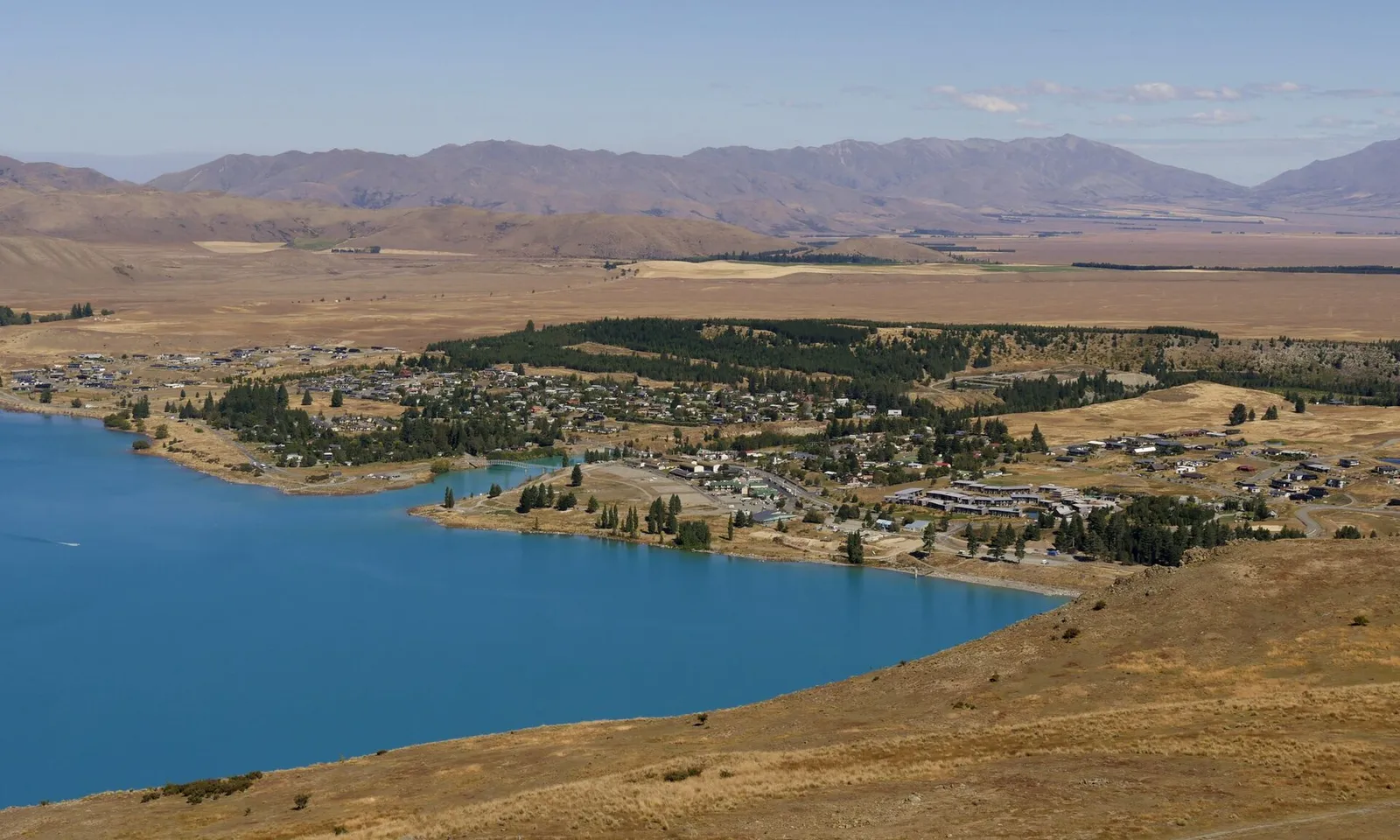
Area context. Lake Tekapo township and its lakeshore, viewed from Mount John. Destination context only, not a verified campground view. Photographed 2015-02-15.
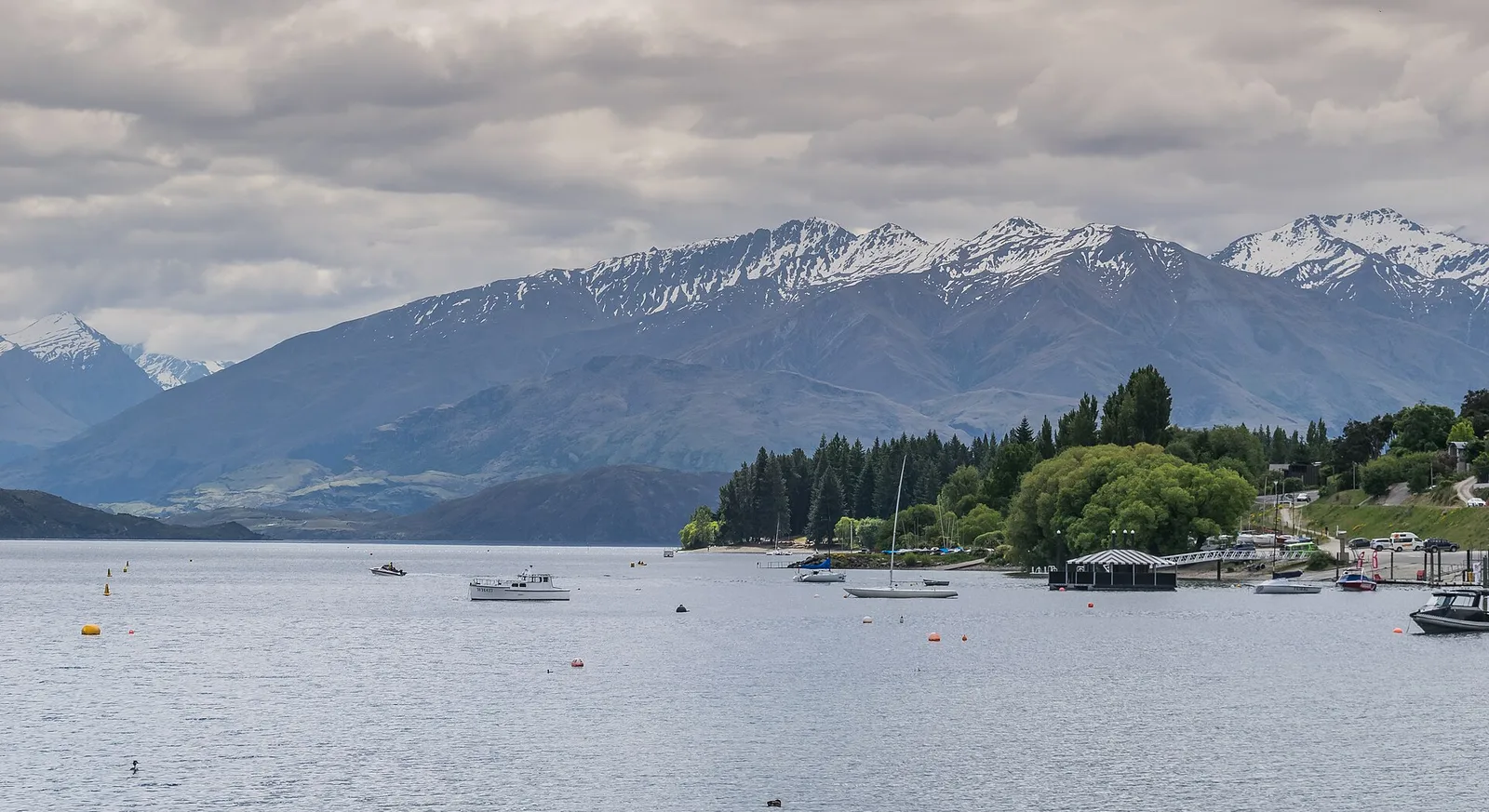
Photo: Ulrich Lange, Bochum, Germany / CC BY 3.0 / DetailsArea context. Lake Wanaka from the town waterfront in 2017. Area context only; the shoreline and visible parking are not identified as permitted overnight sites. Photographed 2017-11-20.
Photo: Krzysztof Golik / CC BY-SA 4.0 / DetailsFrequently asked questions
Does nine days include returning the vehicle to Christchurch?
No. This is a one-way Christchurch-to-Te Anau section. Arrange a permitted onward journey and the actual rental return depot before booking.
Can I add Milford Sound to day 9 before leaving?
Milford Sound is a separate extension, not part of the final lakeside day. Add time for the alpine road, the return journey and any activity check-in.
Are Lake Poaka and White Horse Hill both bookable?
No. Lake Poaka is currently first come, first served; White Horse Hill requires a booking. Check their separate access and parking arrangements.
Why not do the Aoraki walk on the Wanaka transfer day?
Separate days retain weather and fatigue margin. The plan keeps the same Twizel base for the Aoraki return before the next regional move.
Sources & official links
- 1.Journey Planner (checked 29 October 2026)— NZ Transport Agency Waka Kotahi
- 2.Getting Here & Around (checked 29 October 2026)— Mackenzie Region
- 3.Kea Point Track: official route information (checked 29 October 2026)— Department of Conservation
- 4.Driving to Wanaka (checked 29 October 2026)— Lake Wanaka Tourism
- 5.Waterfall Creek Track (checked 29 October 2026)— Lake Wanaka Tourism
- 6.Getting to Fiordland (checked 29 October 2026)— Visit Fiordland / Great South
- 7.Kepler Track: Carpark to Dock Bay and Brod Bay (checked 29 October 2026)— Department of Conservation
- 8.Severe weather warnings (checked 29 October 2026)— MetService
- 9.Land Safety Code (checked 29 October 2026)— Department of Conservation
- 10.Booking and paying for a DOC campsite (checked 29 October 2026)— Department of Conservation
- 11.Live charging map and network FAQ (checked 29 October 2026)— ChargeNet
- 12.Mobile coverage map and limitations (checked 29 October 2026)— One New Zealand
- 13.Nature and Heritage Itinerary: Christchurch to Tekapo (checked 29 October 2026)— Tourism New Zealand
- 14.Aoraki EOTC: time and distance tables (checked 29 October 2026)— Department of Conservation
- 15.Milford Sound hazards and risks (checked 29 October 2026)— Milford Sound Tourism
- 16.Kepler Track (checked 29 October 2026)— Department of Conservation
- 17.Roys Peak Track: lambing closure (checked 29 October 2026)— Department of Conservation
- 18.Albert Town official campground information and FAQ (checked 29 October 2026)— hampshireholidayparks.co.nz
- 19.DOC supplement: Boundary Creek Campsite (checked 29 October 2026)— Department of Conservation
- 20.Christchurch official park information (checked 29 October 2026)— tasmanholidayparks.com
- 21.Henry Creek Campsite (checked 29 October 2026)— Department of Conservation
- 22.Lake Poaka Campsite (checked 29 October 2026)— Department of Conservation
- 23.Operator current accommodation and address (checked 29 October 2026)— www.lakerua.co.nz
- 24.Operator camping and current notices (checked 29 October 2026)— lakesedgeholidaypark.co.nz
- 25.Moke Lake Campsite (checked 29 October 2026)— Department of Conservation
- 26.Queenstown Lakeview official park information (checked 29 October 2026)— hampshireholidayparks.co.nz
- 27.Christchurch Spencer Beach TOP 10 Holiday Park official park information (checked 29 October 2026)— top10.co.nz
- 28.Operator lakeview camping and accommodation (checked 29 October 2026)— teanauholidaypark.co.nz
- 29.Te Anau TOP 10 Holiday Park official park information (checked 29 October 2026)— top10.co.nz
- 30.Twelve Mile Delta Campsite (checked 29 October 2026)— Department of Conservation
- 31.Operator website (checked 29 October 2026)— twizelholidaypark.co.nz
- 32.Tasman Wanaka official park information (checked 29 October 2026)— tasmanholidayparks.com
- 33.Hooker Valley Track (checked 29 October 2026)— Department of Conservation
- 34.Peninsula Trail: local trails, lambing closure and dogs (checked 29 October 2026)— Tekapo Trails
- 35.Mount Iron Track (checked 29 October 2026)— Department of Conservation
- 36.DOC alerts for White Horse Hill and Hooker Valley (checked 29 October 2026)— Department of Conservation