By Outdoor Next Editorial standards
On this page
Key facts
- Season
- Nelson Tasman's regional guide defines autumn as March to May.
- Weather
- A regional seasonal description is not a forecast for a campsite or mountain route.
- Bookings
- Individual DOC campsite pages state whether booking is needed.
Checked against official sources on 30 October 2026. Confirm with the official source before you go.
Plan an autumn camping trip for the actual dates and destination, not a season-wide weather promise. March, April and May belong to the same seasonal label, but your overnight, walking day and access decisions still need their own checks. Begin with a flexible base and add activities only when they fit the current information.
Use the season as a starting point
Nelson Tasman's seasonal guide defines autumn as March to May. Use that to orient the trip, not to predict the weather at every campground or higher route. No nationwide autumn temperature, rainfall or campsite-demand figure is claimed here.
Pick the exact nights you intend to travel before comparing accommodation. Write the destination and any changes of elevation into the plan, then identify the forecast and access information relevant to each. Do not make a campsite decision from a regional tourism description alone.
DOC's weather guidance warns that cold can occur at any time of year and recommends changing plans when needed. Apply that to the actual trip rather than asking whether autumn is generally good or bad for camping.
Resolve each overnight on its own terms
Check bookings and facilities for each overnight even when travelling outside summer. DOC's booking guidance directs visitors to the individual campsite page to establish whether a reservation is required. It also distinguishes non-bookable stays from confirmed reservations. Do not replace that check with an assumption that shoulder-season travel means unrestricted arrival.
Ask the operator about essential facilities and arrival arrangements on your dates. Save the answer with the confirmation and keep the source date visible. If a detail matters to making the overnight work, leave it marked unresolved until verified rather than copying an answer from a summer review.
| Autumn planning question | Useful record |
|---|---|
| When? | Actual dates, rather than only the month or season |
| Where? | Overnight base and the environment of each activity |
| How to arrive? | Current road and operator entry instructions |
| What is supplied? | Date-specific water, cooking and other essential facilities |
| What changes the plan? | Forecast, access or group conditions that trigger an alternative |
Make daylight part of the walking plan
Build the walking day around the daylight and conditions for your travel date. Check the route manager's information and a current dated sunrise and sunset source for the location you are using. This guide does not publish a fixed start time or walking duration that could become detached from the date.
Work backwards from your intended return and include stops, transport and the group's own pace. A head torch belongs in the preparation; it does not replace a daylight plan. If the walk no longer fits, choose a suitable shorter activity after checking its own terrain and current notices.
For a coastal day, treat the tide as another independent constraint. Read the tidal walking guide before fitting a coastal section into a driving day. An attractive forecast does not resolve a crossing window.
Choose a base that can support a changed day
Keep a simpler overnight and activity option available if the original plan no longer fits. Compare the Nelson City TOP 10 profile with the current operator information, then use Nelson and Tasman and the Motueka basecamp itinerary to research the surrounding trip. These are planning examples, not promises of autumn services or spare pitches.
Review the Lake Rotoiti Kerr Bay walks as separate activities to assess. Keep a quiet day at the base as a valid option rather than replacing every cancelled outing with another long drive.
Pack for the decision you made
Lay out the sleeping arrangement, weather clothing and food before loading. Check that the setup works without an unverified heater, shared kitchen or drying facility. If it does not, change the accommodation or equipment plan before departing. Keep the arrival routine simple enough that an unexpected delay does not force a rushed setup.
Before you go
- Recheck the actual dates, forecast, access and campsite instructions.
- Save booking proof or the non-bookable arrival process.
- Check daylight and any tide-dependent section for the correct date.
- Match the dry sleeping kit and meals to verified facilities.
- Agree on a simpler overnight and activity alternative.
Related reading
Prepare for winter road conditions, compare holiday parks and DOC campsites, and review winter sleeping and campsite planning.
Sources and operational details checked 30 October 2026. Recheck the relevant authority or operator before travel.

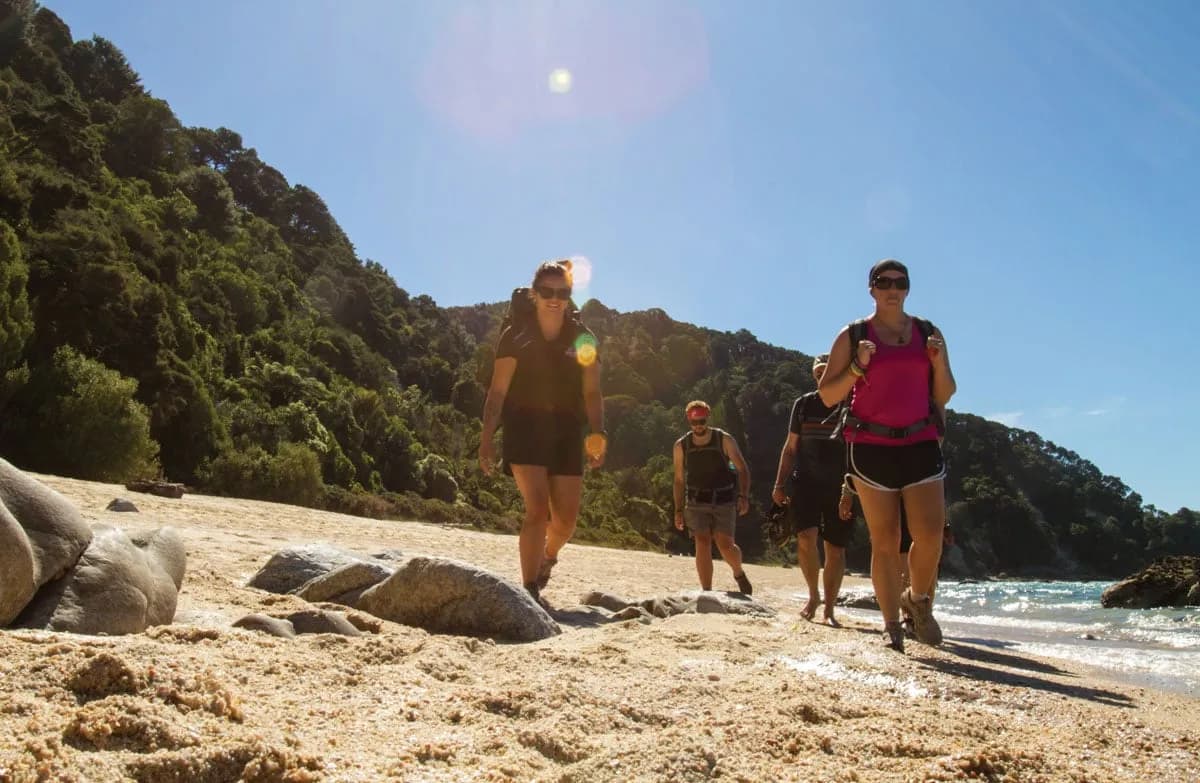
Outdoor Next placeholder graphic; a guide illustration has not been supplied.
Frequently asked questions
Is April automatically a quiet time to camp?
No date-specific demand or availability was verified here. Check the actual campsite and dates rather than assuming an autumn label means spare capacity.
Can I use the same packing list throughout March, April and May?
Start with the essentials, then adapt the sleeping setup, clothing, water and activities to the destination forecast and actual travel dates. The season alone does not establish suitable conditions.
Do DOC booking requirements stop after summer?
Do not assume so. DOC directs visitors to each campsite's page to check booking requirements. Follow that site's current instructions for the dates you intend to stay.