By Outdoor Next Editorial standards
On this page
Key facts
- Information scope
- Check state-highway and local-road information separately.
- Chains
- Follow vehicle instructions, road signs and authority directions.
- Overnights
- Keep a stay-put alternative instead of relying on a fixed through-route.
Checked against official sources on 30 October 2026. Confirm with the official source before you go.
Build a winter road trip around current access information and stages you can change. Decide where you could stay put before deciding how much driving to fit into a day. Equipment matters, but carrying chains does not establish that the road, weather or driver experience suits the journey.
Separate the different access checks
Check state highways and local access roads with their respective road authorities. For a Queenstown Lakes example, the QLDC winter road page supplies local guidance and links to state-highway information. A report for the main road does not resolve the campground entrance, a private access road or the final leg to a walking trailhead.
Write those links against each driving stage. Keep a separate entry for the overnight provider's access instructions, and record an alternative that does not depend on the same uncertain road. Do not follow a navigation shortcut around a closed road without checking the authority's actual diversion information.
| Before a winter stage | Decision to make |
|---|---|
| Roads | Are the main route and final access usable for this vehicle? |
| Conditions | What do current warnings and road instructions mean for this leg? |
| Equipment | Are chains the correct fit, accessible and understood? |
| Driver | Does the intended journey fit current confidence and experience? |
| Overnight | Can you stay put or change the destination if the stage is unsuitable? |
Resolve snow chains with the actual vehicle
Get the correct chains for the vehicle and practise fitting them before the trip. QLDC says drivers are responsible for knowing how to fit chains and should check the manual or ask a mechanic if unsure which wheels to use. A demonstration is more useful than finding an unfamiliar bag of chains after conditions change.
For a rental, ask the supplier to confirm the fit, instructions and any vehicle or road restrictions. Keep the fitting instructions and required equipment accessible. Do not infer the fitting wheels from another model, or treat a chain set supplied for a previous vehicle as automatically suitable.
Follow the current signs and authority directions. QLDC's guidance identifies settling snow, a chains-required sign or instructions from relevant authorities as reasons to fit chains. This local guidance is not a nationwide promise that carrying chains alone satisfies every route's requirements.
Keep information current at the decision point
A road report is a snapshot, so reassess conditions before each stage. Save useful links offline, but do not treat yesterday's screenshot as current clearance. If information is missing, resolve it before entering a leg whose return or overnight depends on it.
Use DOC's weather guidance to check destination forecasts and warnings for any walking or conservation-area visit. A town forecast and a mountain outing answer different questions. Reconsider the activity independently even when the road journey remains possible.
Build an itinerary with somewhere to wait
Use the Queenstown and Wānaka itinerary as a sequencing idea, not a winter driving schedule. Compare its stages against current access and the Otago destination information. Remove a stop when it would make the whole day depend on a narrow or uncertain arrival.
Before booking, research a property such as Queenstown TOP 10 Holiday Park through its current operator information. Confirm the dates, vehicle suitability and arrival arrangement. No winter availability or current access is certified by linking its profile here.
A walking alternative also needs its own checks. The Lake Gunn Nature Walk is a route to research, not a weather-proof fallback for any South Island road closure. An alternative dependent on another long drive may not solve the original problem.
Agree on the change decision
Talk through what happens if a stage becomes unsuitable: where the group stays, which bookings need updating and who communicates the revised plan. Keep the decision practical rather than turning it into a debate about completing the original itinerary. Nobody needs to prove a vehicle's capability by continuing against official instructions.
Before you go
- Reopen current main-road, local-road and destination information.
- Check chain fit and instructions for the actual vehicle.
- Resolve the final access to the overnight stop.
- Save a stay-put alternative and relevant booking-change details.
- Reassess the road and any walk separately before departure.
Related reading
Join the route to a Cook Strait ferry plan, prepare a winter campsite, and consider the different checks for autumn camping.
Sources and operational details checked 30 October 2026. Recheck the relevant authority or operator before travel.

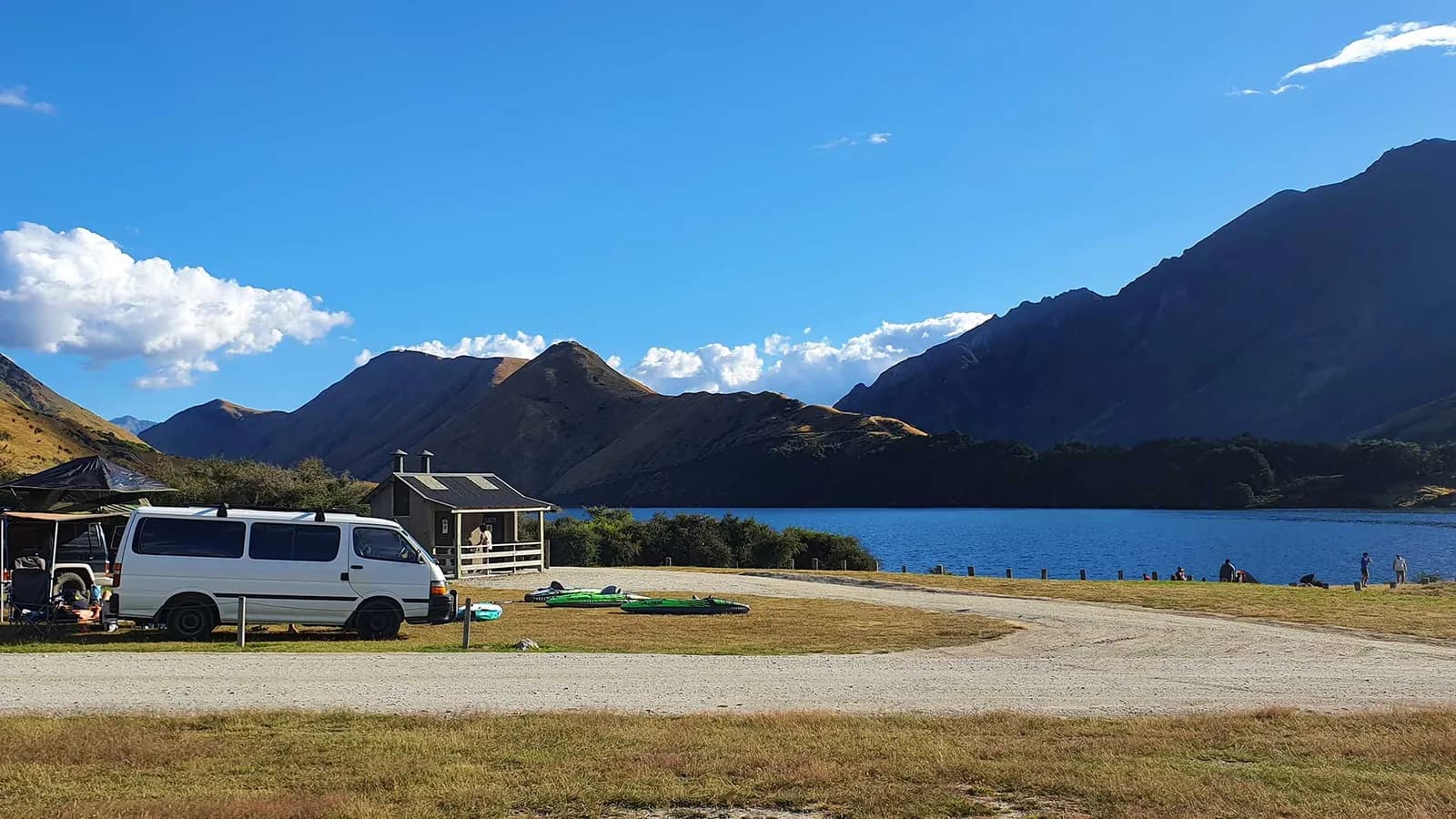
Outdoor Next placeholder graphic; a guide illustration has not been supplied.
Frequently asked questions
Do all New Zealand roads always require chains in winter?
No nationwide rule is asserted here. QLDC publishes local chain guidance; check the exact road, vehicle instructions, signs and current authority directions.
Which wheels should take snow chains?
QLDC advises checking the vehicle manual or asking a mechanic if unsure. Resolve the correct fit and fitting method for the actual rental or privately owned vehicle before departure.
Can an earlier road report prove my evening drive will be suitable?
No. QLDC describes reports as a snapshot and warns conditions can change. Recheck close to departure and follow current signs and directions, including any closed road notice.