Sun, Sandflies and Water Safety for NZ Summer Camping
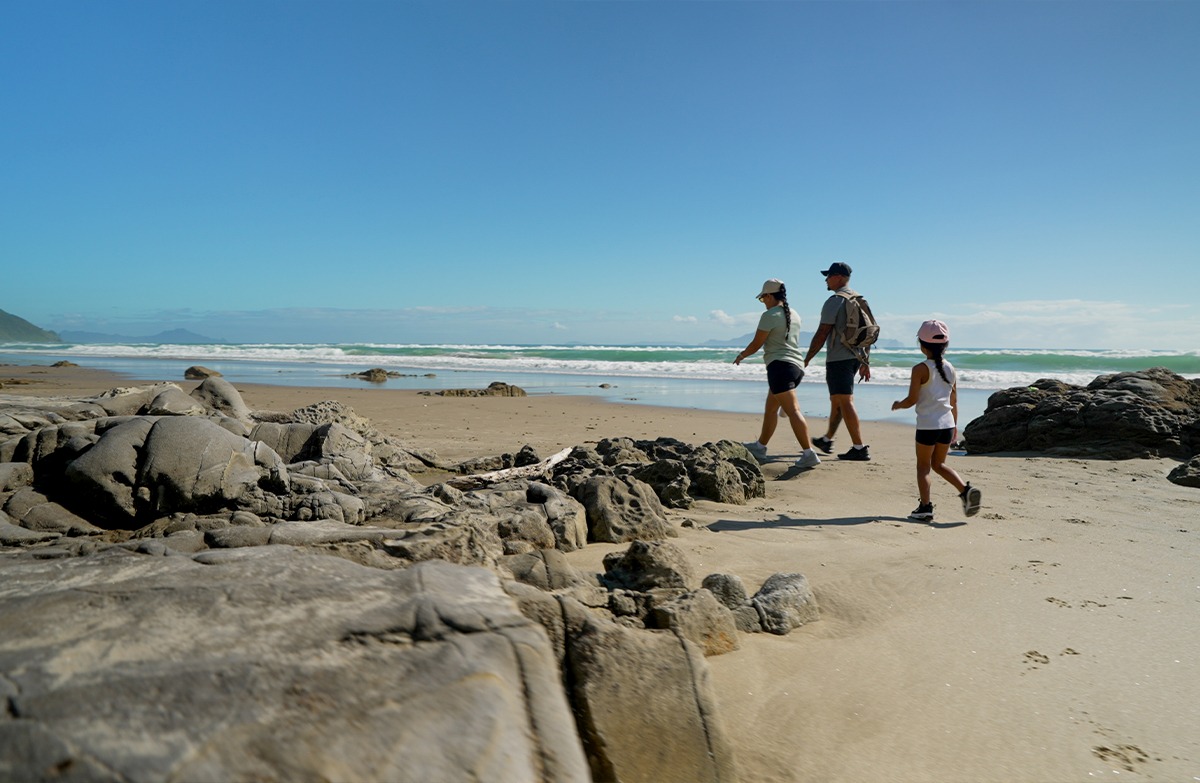
Illustrative photograph. General outdoor context from an existing reviewed DOC photograph. It illustrates the topic and is not an instruction, a current-conditions photograph or a guide to this guide's advice. Mangawhai Heads Beach. Published in DOC's Mangawhai Cliffs Walkway guide. Photograph date not supplied; this is route-area context, not a verified trailhead or current-condition photograph.
Photo: Fraser Rudman / CC BY 4.0 / DetailsPractical summer camping preparation for New Zealand: sun protection alerts, where to read about sandflies, the Water Safety Code and the 2026 lifejacket rule.
Last checked 5 November 2026 / By Outdoor Next / Editorial standards
On this page
Plan sun protection, bite prevention and water safety before a summer camping trip. This page is general preparation drawn from official sources, not personal medical or safety advice. As of 5 November 2026, the points below match the linked pages.
Sun
SunSmart's Sun Protection Alert tells you the time each day that you need to protect your skin and eyes, set for your location. It says protection is required when UV levels are 3 or higher, and that the alert runs through the daylight-saving months, September to April, with data provided by NIWA. Check the official page. Checked 5 November 2026.
SunSmart's five steps are Slip on clothing, Slip into shade, Slop on sunscreen, Slap on a hat and Wrap on sunglasses. Check the official page. Checked 5 November 2026. The Land Safety Code also lists sun protection in the kit for short trips, and asks you to bring plenty of water in hot weather. Check the official page. Checked 5 November 2026.
A practical habit: look at the alert in the morning, keep a hat and sunscreen in the day pack rather than the car boot, and plan shade for your lunch stop.
Sandflies
We cover sandflies in a separate guide so the detail stays in one place: where and when to expect them, prevention, shelter choices and when to ask a pharmacist or clinician for advice. See Sandflies in New Zealand. Te Ara, the encyclopedia of New Zealand, is the background source for their habits. Check the source. Background source rechecked 5 November 2026; the separate sandfly guide was not edited in this review.
The Water Safety Code
Water Safety New Zealand's code has five "ways to survive". Check the official page. Checked 5 November 2026.
| Way to survive | What Water Safety NZ says |
|---|---|
| Know how to float | If you get into trouble, float on your back with your ears in the water. |
| Find the safest place | Assess conditions and look for dangers like strong currents; places with lifeguards on duty are the safest. Pay attention to warning signs and flags. |
| If in doubt, stay out | Check the weather before leaving home; it is better to wait for another day. |
| Take care of yourself and others | Go with a buddy and tell someone your plans. Wear a properly fitted lifejacket. When children are in or near the water, a responsible adult should be within arm's reach and watching them carefully. |
| Know how to get help | Raise your arm and call out. If you see someone who needs help, call 111 and ask for Police. |
Lifejackets, as of 5 November 2026
Maritime NZ confirms the Lifejackets on Recreational Craft Amendment Act is in effect from Friday 9 October 2026. People on recreational craft six metres or less in length must now wear a properly fitted lifejacket while underway, unless an exclusion applies, and the rule applies everywhere in New Zealand. Maritime NZ says specific national offences and penalties had not been created yet; existing consistent local bylaws and other maritime offences can still apply. Check the official page. Checked 5 November 2026.
Water Safety NZ also recommends wearing a lifejacket at all times, and always wearing one when rock fishing or gathering kai in tidal environments. Check the official page. Checked 5 November 2026. Rules can change, so check Water Safety NZ before you launch a kayak, dinghy or boat.
Rivers and lakes at camp
Check whether the actual swimming place has lifeguards on duty and read its warning signs. Use the five ways above, and read river crossing advice before wading anywhere that is moving fast, murky or noisy.
Before you go
- Check the Sun Protection Alert and pack hat, sunscreen and water.
- Read the sandflies guide.
- Pack fitted lifejackets for everyone who will be on or near the water.
- Tell someone your plans, as the Water Safety Code and the Land Safety Code both suggest.
Save the camp care checklist and check the land manager's page for your exact destination. A useful habit is to keep a backup if a planned stop or activity is unavailable.
Sources & official links
- Lifejacket wearing rule amendment (Maritime New Zealand)
- UV radiation and the five SunSmart behaviours (SunSmart)
- Sun Protection Alert (SunSmart (Cancer Society))
- Sandflies: New Zealand’s blackflies (Te Ara)
- New Zealand's Water Safety Code (Water Safety New Zealand)
- Lifejackets save lives (Water Safety New Zealand)
- NZ Land Safety Code (NZ Mountain Safety Council)
Frequently asked questions
When do I need sun protection in New Zealand?
SunSmart says protection is required when UV levels are 3 or higher. Its Sun Protection Alert gives the daily times for your location and runs through the daylight-saving months, September to April.
What is the lifejacket rule that started in October 2026?
Water Safety NZ says the Lifejackets on Recreational Craft Amendment Act took effect on Friday 9 October 2026. People on recreational craft six metres or less in length must wear a properly fitted lifejacket while underway, unless an exclusion applies. Check Water Safety NZ for the current detail.
What are the five ways to survive in the water?
Water Safety NZ lists: know how to float, find the safest place, if in doubt stay out, take care of yourself and others, and know how to get help.
Keep planning