Tent Cleaning, Drying and Storage: A Practical After-Trip Routine
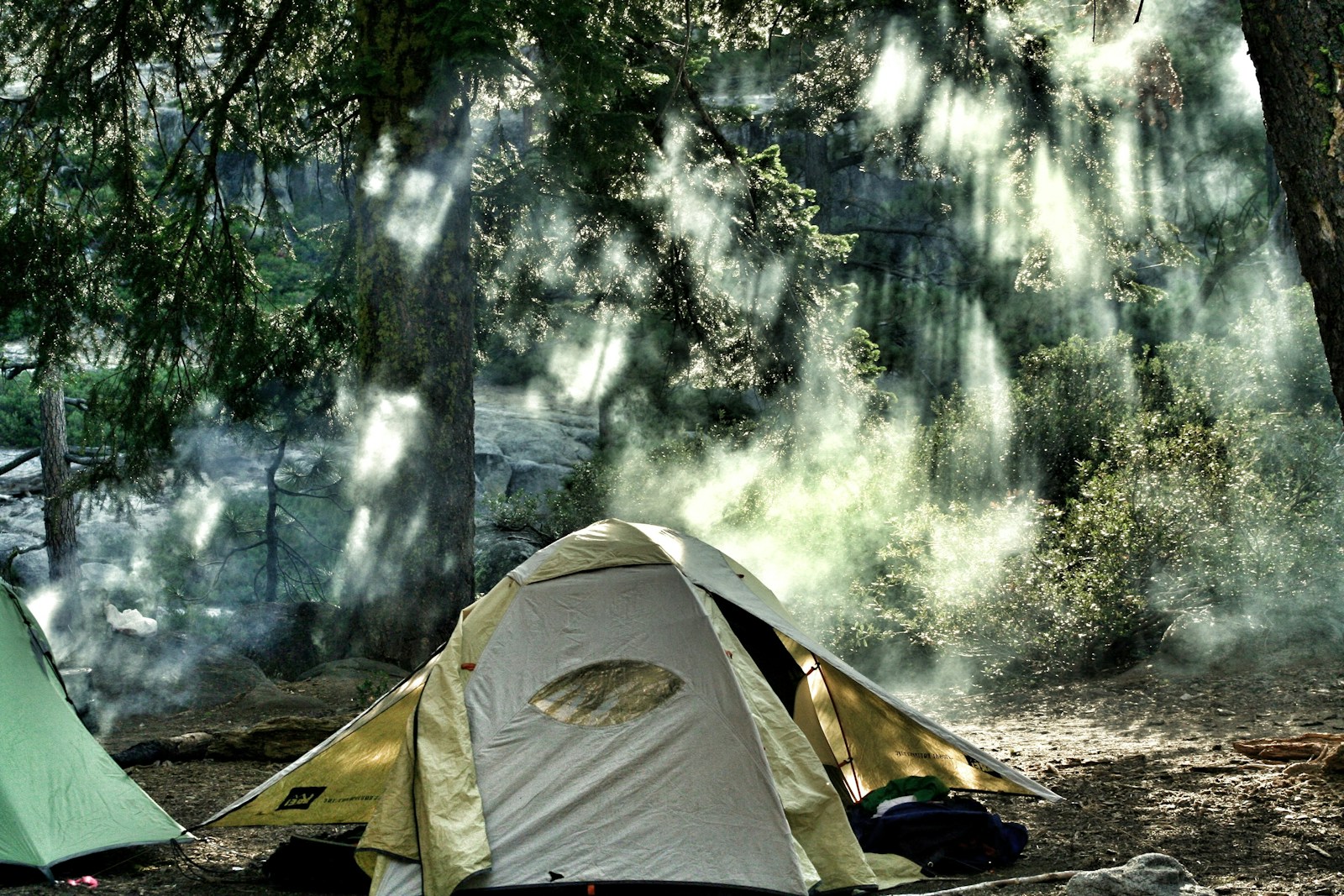
Illustrative photograph. Pitched tents in Yosemite Valley, United States, not a New Zealand campsite or a pitching demonstration.
Photo: Andrew Scofield / Unsplash License / DetailsBring a wet tent home, choose a material-safe cleaning method, dry hidden damp areas and store the complete kit ready for your next New Zealand camping trip.
Last checked 13 October 2026 / By Outdoor Next / Editorial standards
On this page
Packing a wet tent for the journey home is not the same as putting it into storage. Unpack promptly, clean only as the manufacturer directs, dry every component and inspect the kit before packing it away. This routine gives you specific jobs to finish after a New Zealand camping trip, without assuming that every fabric, coating or air-frame system needs the same treatment.
Make a drying plan before packing down
Before the trip, decide where the tent can dry if it comes home wet. A large family shelter may need a different space from a small tramping tent; work that out before the wet bundle arrives in the hallway. Have a separate transport arrangement for damp fabric so it does not share space with dry bedding.
NZ Mountain Safety Council's pack-up advice recommends drying or shaking off water where practical, not standing on the laid-out tent, and hanging it to dry at home. Do not remain at an unsuitable campsite just to wait for sunshine. The wet-weather camping guide covers that departure decision.
Remove loose belongings and food, account for the components and follow the model's dismantling sequence. Put damp fabric and dirty pegs where they will not contaminate the sleeping kit. Make unpacking the wet tent an arrival-home job, not a task deferred until the next holiday.
Choose the cleaning method by material
Use the cleaning instructions for the exact tent material, not a universal soap recipe. Read the care label or manual before using a product you already own for jackets, shoes or household cleaning.
| Source and scope | What the manufacturer says | What not to assume |
|---|---|---|
| MSR tent-cleaning guidance | For heavier soiling, hand wash with warm water, a sponge and mild non-detergent soap; rinse and air-dry. It excludes dishwashing liquid, detergent, bleach and machine washing or drying. | That an ordinary household soap or a washing-machine gentle cycle is suitable. |
| Zempire air-tent care guidance | For mildew, use warm water and a soft brush, without soap or detergents; dry completely as soon as possible after a wet pack-down. | That MSR's soap advice transfers to a different manufacturer's tent. |
| Your exact model's manual | Follow its material, cleaning-product and packing instructions. | That canvas, coated synthetic fabric and other constructions share one treatment. |
Separate routine dirt removal from an attempt to repair deteriorated material. If there is little dirt, do not turn the return-home routine into unnecessary full washing: MSR says cleaning is not generally needed unless the tent smells or is heavily soiled. If you do wash it, the drying job starts again afterwards.
Check for mildew and coating problems
Inspect rather than spraying over a musty smell or sticky surface. MSR's clean-and-dry guidance explains that prolonged moisture can degrade a waterproof coating as well as encourage mildew. A stain, smell and failed coating are not interchangeable problems.
Use only the maker's recommended approach for the condition you find. Do not add bleach, solvents or a stronger household mixture because gentle cleaning leaves a mark. Ask the manufacturer about assessment when the coating is sticky, flaking or separating. Cleaning cannot be assumed to restore damaged waterproofing.
For moisture that appeared during the trip, record its position before cleaning obscures the evidence. The condensation and leaks tutorial explains why a wet patch does not alone identify the cause.
Dry every layer, not just the visible fly
Dry the fly, inner, floor, footprint and bags completely before long-term storage. Follow the maker's instructions for pitching or hanging the tent and support it so the fabric can air without being dragged across rough ground. Check undersides and folded areas, not only the surface facing you.
Work through a simple component check:
- Separate or reposition the layers where the design allows, so concealed surfaces can dry.
- Check floor corners, seams, pockets and webbing for remaining moisture.
- Inspect both sides of the footprint, if used.
- Dry the carry bag and component bags rather than returning dry fabric to a damp container.
- Put poles, pegs and any pump aside for inspection and care according to their instructions.
There is no fixed drying time: weather, fabric and the way components are supported differ. Check again before packing. For long-term storage, MSR recommends a cool, dry place away from direct sunlight. Do not leave the tent pitched indefinitely simply because it is already dry.
Repack with an inspection record
Record damage and missing parts while unpacking, then resolve them before the next trip. Photograph the affected component and note the tent's exact model and version. MSR's repair advice stresses accurate identification before choosing replacement parts; a similar product name is not enough.
Write a short kit note: inspected components, anything missing and repairs still outstanding. Keep it with the manual or packing list. Do not mark the tent ready merely because it fits back into its bag.
Follow your model's storage arrangement. MSR's oversized breathable-bag recommendation is useful for its tents, but not a universal instruction for every family tent. Wherever you store the kit, avoid trapping residual moisture and keep the instructions and compatible repair items easy to find.
Before you go
- Retrieve the tent early enough to inspect it, not on departure morning.
- Check the previous trip's repair note and replace missing parts.
- Run a complete practice pitch, including vents and anchors.
- Confirm the sleep layout using the family tent guide.
- Update the camping checklist and plan the next drying space.
Related Outdoor Next reading
- How to choose a tent: assess repair support and ownership needs before buying.
- Camping mats: inspect and care for the other half of your sleeping setup using its own instructions.
Sources & official links
- Camping: packing up and drying the tent (NZ Mountain Safety Council)
- What's the best way to clean or wash my MSR tent? (MSR / Cascade Designs)
- How should I store my tent? (MSR / Cascade Designs)
- How do I keep my MSR tent clean and dry? (MSR / Cascade Designs)
- Air Tents Explained: cleaning and care guidance (Zempire NZ)
- Broken or Damaged Tent Repair Options (MSR / Cascade Designs)
Frequently asked questions
What should I do if I have to pack my tent wet?
Keep it separate from dry bedding for transport, then unpack and dry it completely as soon as possible. Do not leave the travel bag closed until the next trip or assume a rain-free pack-down means every layer was dry.
Can I wash a tent with washing-up liquid or put it in the washing machine?
Do not use those as a default. MSR prohibits dishwashing liquid, detergents and machine washing or drying in its tent-care guidance. Zempire says not to use soap or detergents. Follow the exact model's instructions.
How long does a tent take to dry?
There is no fixed time established here. Check every layer, underside, seam and bag rather than relying on a timer or the fly's appearance. Reposition supported fabric so hidden damp areas can air.
Should every tent be stored loosely in a mesh bag?
No universal bag rule applies. MSR recommends a breathable oversized bag for its tents, while other manufacturers can specify different packing arrangements. Follow your model's guidance and choose a cool, dry storage location.
Keep planning