By Outdoor Next Editorial standards
On this page
Key facts
- Freedom camping allowed?
- Yes, on most council-controlled public land (including most roadsides), except prohibited areas, council reserves and regional parks
- Vehicle requirement
- Certified self-contained vehicle only; no tents in public places
- Maximum stay
- Two nights in the same road or off-road parking area; leave by 9am; no return to that area for two weeks
- Waiheke Island
- Two nights maximum, then leave the island on the third day to use a public dump station
- Fines
- Infringement fines of up to $800
- Rules set by
- Auckland Council (Freedom Camping in Vehicles Bylaw 2022)
Checked against official sources on 13 September 2026. Rules and conditions are set by Auckland Council — confirm with them before you go.
Review note, 24 September 2026: the main council rules and map pages could not be reopened. Local details below retain the 13 September source-check date. Council's dated 2022 rules announcement and March 2026 Coxs Bay notice were reopened; confirm current site permission with council before arrival.
You can freedom camp in a certified self-contained vehicle on most council-controlled public land in Auckland, including most roadsides. You can stay a maximum of two nights in the same road or off-road parking area, must leave by 9am, and can't come back to that area for two weeks. For tent camping, use a designated campground, and some areas are off-limits or have extra rules, so check the exact spot before you park up.
These rules come from Auckland Council's Freedom Camping in Vehicles Bylaw 2022. For what "certified self-contained" means and how certification works, see our national freedom camping guide.
Choose a stop for your vehicle and overnight needs
Separate the overnight permission question from the places you want to visit during the day. Being close to a beach or walking track does not make its car park an eligible camping area.
| Your setup or need | Start here | Check before committing |
|---|---|---|
| Certified self-contained vehicle, short city stop | Council's exact address and local-board restriction maps | Land manager, current notices, marked spaces, departure time and return restriction |
| Tent or vehicle without the required certification | Auckland campsites and holiday parks | The recorded stay type, booking arrangements and your actual pitch |
| Shore power or a longer base | Powered campsite selection | The site's region, power connection rules and whether a suitable pitch can be booked |
| Beach-based campground stay | Ōrewa Beach, Whangateau or Tāwharanui | These are separate campground options, not additional freedom-camping permissions |
The vehicle regulator's guidance, reopened on 12 October 2026, distinguishes certified vehicles from designated non-self-contained sites and ordinary campgrounds. Certification is not a substitute for local permission. This targeted national check does not update Auckland's bylaw maps or establish space at any stop.
Choose your overnight backup before sightseeing. Then compare Auckland walking options or place the stay within a North Island itinerary. Treat a walk's parking and a campsite's overnight rules as two separate decisions.
The general rules
Auckland Council's general rules page says freedom camping in Auckland means staying overnight on council-controlled public land in a vehicle or caravan. At the time of checking, you must:
| Rule | What it means in practice |
|---|---|
| Vehicle | Use a certified self-contained vehicle |
| Length of stay | A maximum of two nights in the same road or off-road parking area, like a council car park |
| Leaving | Vacate your parking space by 9am on the day you leave |
| Coming back | Don't return to stay in the same road or parking area within two weeks, counted from 9am on the day you left |
| Tents | Use a designated campground |
| Restricted areas | Follow any extra rules, such as marked spaces or a cap on vehicles |
Normal parking and road rules still apply. That means clearways, time limits, no parking on grass or dotted yellow lines, and no blocking driveways. So do rules on litter, fires, noise, alcohol bans and dogs.
Where you can't freedom camp
Freedom camping isn't allowed in tents in public places, on council reserves, in regional parks, or at the areas the bylaw prohibits. According to Auckland Council, you can't freedom camp:
- at areas the bylaw prohibits
- on council reserves (parkland held under the Reserves Act)
- in regional parks, where paid camping is available in designated areas instead
- in car parks where parking is reserved or a fee is charged, such as council parking buildings.
The bylaw also doesn't cover land managed under other laws or by other agencies, such as maunga (volcanic cones), state highways and conservation land. The Department of Conservation lists Auckland conservation areas where freedom camping is prohibited, including Lake Rototoa, Logues Bush, Okahukura Manukapua and Papakanui Spit.
How to check a specific spot
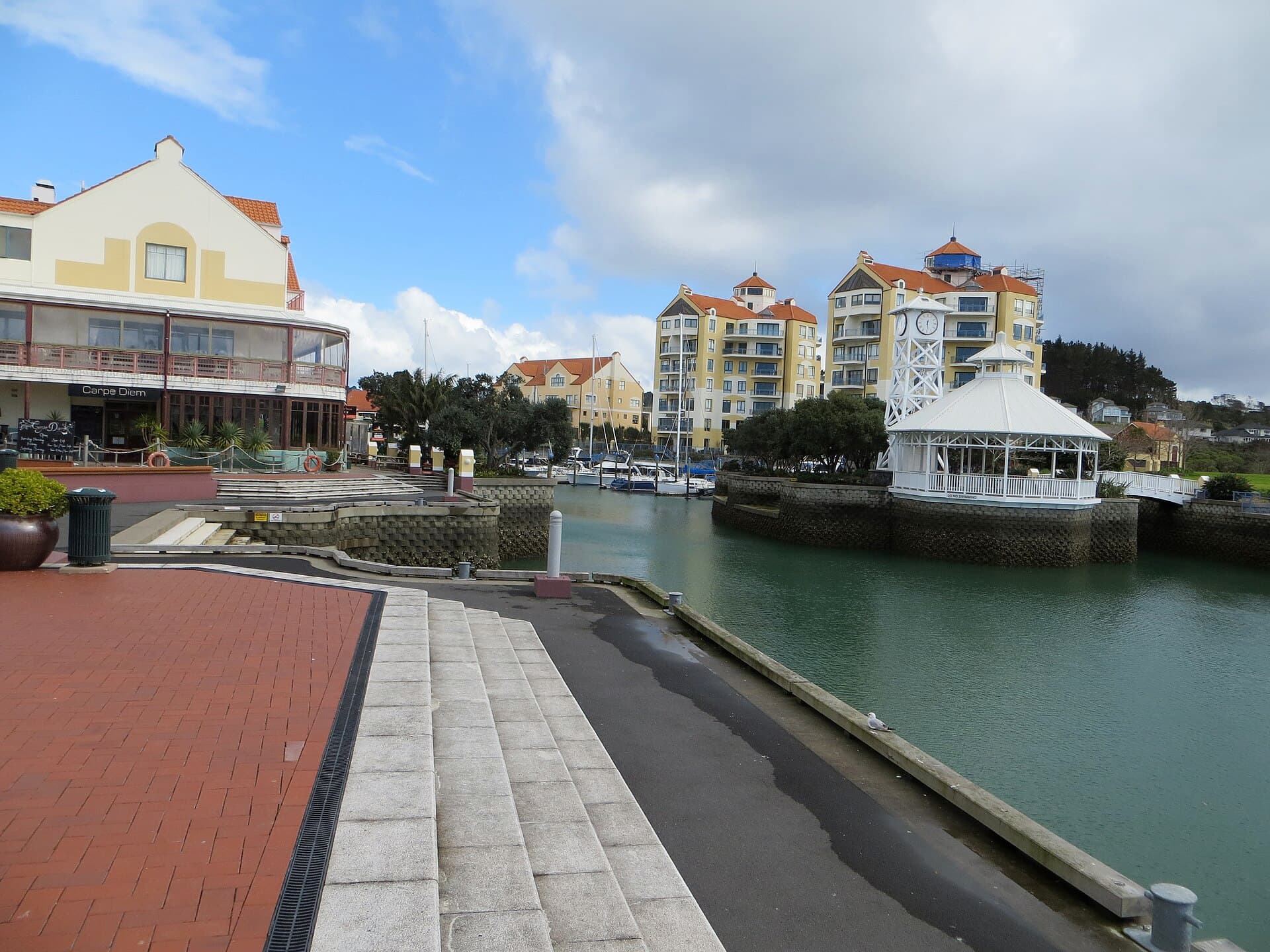
The council has a prohibited and restricted areas page where you search an address, find the local board, then open that board's maps. Restricted areas have additional site-specific conditions. One example is Gulf Harbour Marina Hammerhead Reserve, which has a cap of 10 self-contained vehicles in marked spaces.
A few things to know:
- A spot not being listed doesn't mean freedom camping is allowed there. Reserves, regional parks and gated or reserved car parks are still off-limits.
- If you're unsure, look for signs in the area.
- Rules change. From 1 April 2026 the council temporarily banned freedom camping at Coxs Bay in Westmere, which had been a restricted site. The March notice said a wider review was planned later in 2026; that was an announcement, not confirmation of the review's outcome.
Waiheke Island
Waiheke doesn't have a public dump station for campers. On the island, the two-night limit covers the whole island. You must leave on the third day to empty your waste at a public dump station, and you can't return to the same road or parking area on Waiheke within two weeks. If you want to stay longer, you'll need to book other accommodation.
Waste and fines
By law you have to dispose of the toilet waste and grey water stored in your vehicle properly. The council suggests looking for the blue dump station symbol or searching the CamperMate or Camping NZ apps.
The council can issue an infringement notice and a fine of up to $800. Fines apply for things like camping in a prohibited area or on a reserve, overstaying, not leaving by 9am, or using a vehicle that isn't certified self-contained. Courts can impose higher penalties if the council prosecutes.
Camping near Auckland without a self-contained vehicle
Without a certified self-contained vehicle, you need a campground: book a regional park campground or stay at one of the council's holiday parks. Auckland Council runs both:
- Regional parks. You can only camp in a regional park if you've booked and paid for a designated camping area. The network includes campgrounds with vehicle access, such as Tāwharanui , Te Haruhi Bay at Shakespear and Ambury. It also has overnight parking areas for certified self-contained vehicles at parks such as Long Bay, Wenderholm, Ōmana, Shakespear and Te Ārai.
- Holiday parks. The council's Auckland Holidays site lists Martin's Bay, Ōrewa Beach and Whangateau holiday parks, all with camping sites.
The council advises booking early for popular sites, such as Tāwharanui over the summer months.
Before you go
- Check your vehicle's self-containment certification is current. Our freedom camping guide explains what's needed.
- Look up the local board map for your spot and check for signs when you arrive.
- Plan to move on by 9am after your second night, and don't return to the same area within two weeks.
- On Waiheke, plan to leave the island on the third day.
- Know where your next dump station is before your tanks fill up.
- If you're not self-contained, book a regional park campground or holiday park instead.
- Rules can change, including through a bylaw review, so confirm with Auckland Council before you go.
Since 7 June 2026, only green-warrant certification is recognised where certified self-containment is required. For an alternative to roadside camping, see Tāwharanui camping, choosing a campsite and the packing list.
Frequently asked questions
Is freedom camping allowed in Auckland?
Yes, if you're in a certified self-contained vehicle. Auckland Council allows freedom camping on most council-controlled public land, including most roadsides, but not in prohibited areas, on council reserves, in regional parks, or in car parks where parking is reserved or a fee is charged.
How many nights can I freedom camp in one spot in Auckland?
Two nights in the same road or off-road parking area. You must vacate your space by 9am on the day you leave and can't return to stay in that same area within two weeks. Some restricted areas have tighter limits, so check the local board page for the spot you're heading to.
Can I freedom camp in a tent or a van that isn't self-contained in Auckland?
No. Use a designated campground for a tent or non-self-contained vehicle; do not assume public land permits an overnight stay. Auckland Council says campers without one need to use campgrounds with suitable facilities, such as regional park campgrounds or holiday parks.
What is the fine for illegal freedom camping in Auckland?
Auckland Council says it can issue an infringement notice and fine of up to $800 for breaching the Freedom Camping Act 2011, the Freedom Camping in Vehicles Bylaw 2022 or the Reserves Act 1977. Courts can impose higher penalties if the council prosecutes.
Where are the camping grounds near Auckland?
Auckland Council runs bookable campgrounds and self-contained vehicle parking areas in its regional parks, including Shakespear, Long Bay, Wenderholm and Tāwharanui, plus holiday parks at Martin's Bay, Ōrewa Beach and Whangateau. Regional park camping must be booked and paid for in advance.
Sources & official links
- 1.General rules and information for freedom campers in Auckland— Auckland Council
- 2.Freedom Camping in Vehicles Bylaw 2022— Auckland Council
- 3.Prohibited and restricted freedom camping areas— Auckland Council
- 4.Fines and infringements for illegal freedom camping and camping at reserves— Auckland Council
- 5.Freedom camping in Hibiscus and Bays— Auckland Council
- 6.Auckland Council temporarily bans freedom camping at Coxs Bay— OurAuckland (Auckland Council)
- 7.Camping in a self-contained vehicle or campervan in regional parks— Auckland Council
- 8.Book accommodation at our parks— Auckland Council
- 9.Auckland Holidays: holiday parks— Auckland Council
- 10.Conservation areas where freedom camping is prohibited or restricted— Department of Conservation
- 11.Changes to freedom camping rules from today (1 September 2022)— Auckland Council
- 12.Private vehicle owners: green warrants and certification— Plumbers, Gasfitters and Drainlayers Board