Walking Basecamps and Rain Backups in NZ
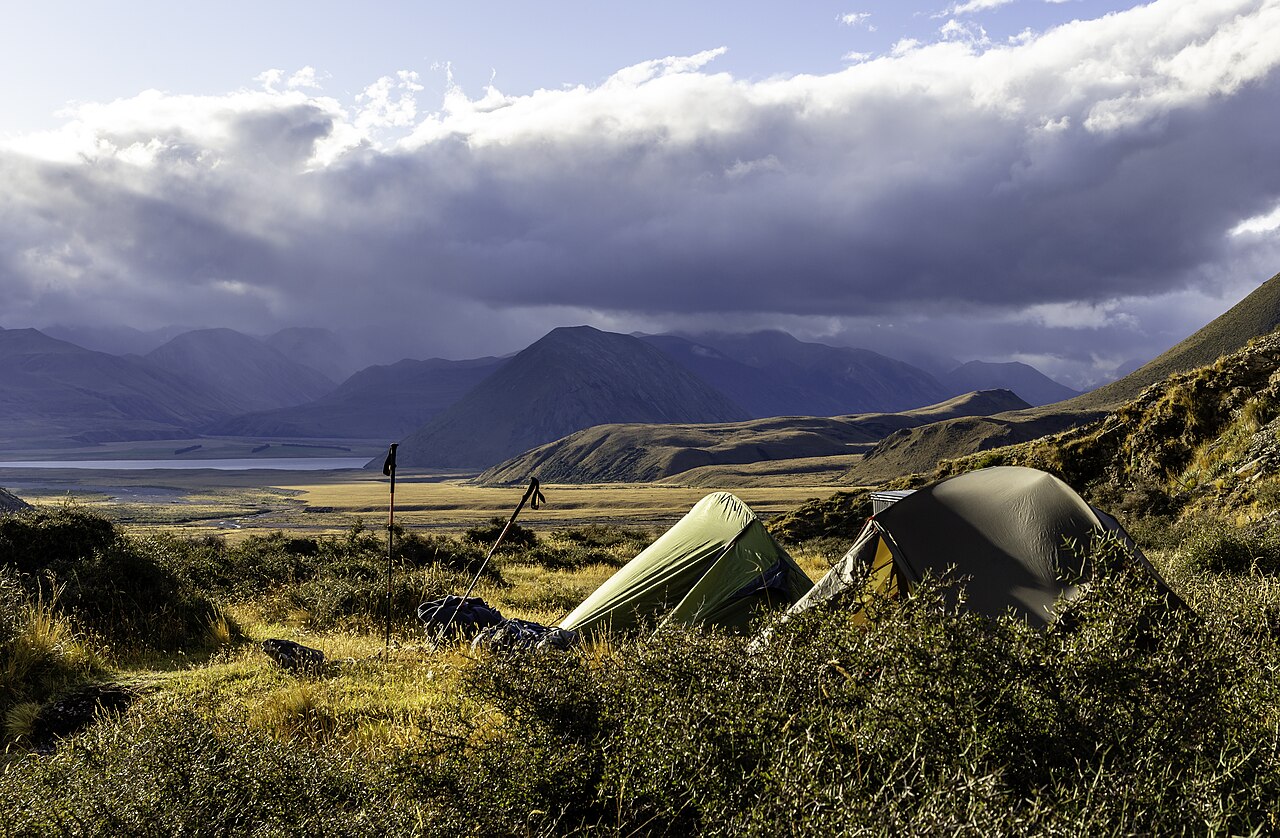
Illustrative photograph. Two tents and trekking poles by Double Hut, Canterbury, New Zealand. General camping imagery, not a depiction of the featured campground. Basecamp-planning illustration, not a recommendation to pitch here or to walk in the pictured weather. Photographed 2020-03-08.
Photo: Michal Klajban / CC BY-SA 4.0 / DetailsChoose a walking base by access and useful alternatives, not map distance alone. Compare town and campground stays, rain options and when to change plans.
Last checked 21 October 2026 / By Outdoor Next / Editorial standards
On this page
A useful base gives you different workable days, not several versions of the same access problem. Before booking several nights, compare the journeys to your intended walks, the services you need and what you would do if the main outing became unsuitable. The closest campsite on a map is not automatically the most practical base.
Compare the entire stay
Choose two plausible bases from the campsite directory or your accommodation shortlist. For each, record the actual route to the trailhead, any transport booking, daily repacking and essential services. Compare repeated travel across the whole stay rather than one outward journey.
A town stay may suit a group needing supplies or separate activities; a campground may suit a group already carrying its sleeping setup. Neither guarantees public transport, drying facilities or an indoor communal room. Confirm those details for the actual property and product.
Give each day a different job
| Day option | What makes it useful |
|---|---|
| Main walking objective | Appropriate route and conditions, with confirmed access |
| Smaller outdoor outing | Independently checked route, not just a shorter distance |
| Non-walking day | A real activity or rest plan that works for the group |
| Change-of-plan option | A feasible way to stay, move or postpone when needed |
The existing Te Anau basecamp itinerary and Motueka basecamp itinerary are starting points for comparing this structure. They are not promises that every suggested activity or connection is available on your dates.
Make the rain option independent
A shorter walk is not automatically a suitable wet-weather alternative. Read that route's own notices and assess the approach as well as the track. DOC's alerts guidance directs visitors to check weather and road closures alongside conservation-area notices.
Choose a backup that does not depend on the same closed road or cancelled transport. If both outings need the same mountain access or ferry, they may fail together. An indoor visit, equipment-care day or rest day can be worth planning, but check the actual venue's hours, access and booking needs before treating it as an option.
Do not invent a local attraction to fill a gap. Use the destination directory, follow the responsible provider's current information, and leave an unverified option off the day's commitments.
Agree when to change the plan
MetService explains that warnings include the affected area, validity period, likely impacts and recommended actions. Read those details for your journey and destination, not simply the forecast icon beside a town name. An indoor booking does not justify travelling against official advice.
Decide who checks updates and when the group will reconsider the day. Review both outward and return access. Follow the Land Safety Code by changing plans when needed and telling your trusted contact about a changed outing. Do not let prepaid accommodation determine whether a walk proceeds.
Before booking multiple nights
- Verify the services your group actually needs.
- Compare transport and total daily travel for each candidate base.
- Keep at least one alternative independent of the main outing's access.
- Read accommodation and activity change terms separately.
- Use the wet-weather camping guide if the overnight setup itself needs reconsidering.
Cover: Tents by Double Hut, Canterbury, New Zealand. Illustrative planning photograph, not a current service or availability report. Photo, source and licence. Guide sources reviewed 21 October 2026.
Sources & official links
- Alerts and important notices (Department of Conservation)
- About Severe Weather Warnings and Watches (MetService)
- Land Safety Code (Department of Conservation)
Frequently asked questions
Should my walking base be the closest campsite to the trail?
Not necessarily. Compare actual access, repeated travel, services and alternatives. A slightly different base may make the whole stay more workable, but verify its transport and facilities.
Is a short forest walk always a good rain alternative?
No. It needs its own weather, closure and hazard check. Distance alone says nothing about flooded access, unstable trees or the conditions on the route.
Does having an indoor backup mean I should travel during a warning?
No. Check the journey and follow current official advice. Staying put, changing accommodation or postponing may be more appropriate than travelling to an alternative attraction.
Keep planning