First-Night Planning in New Zealand
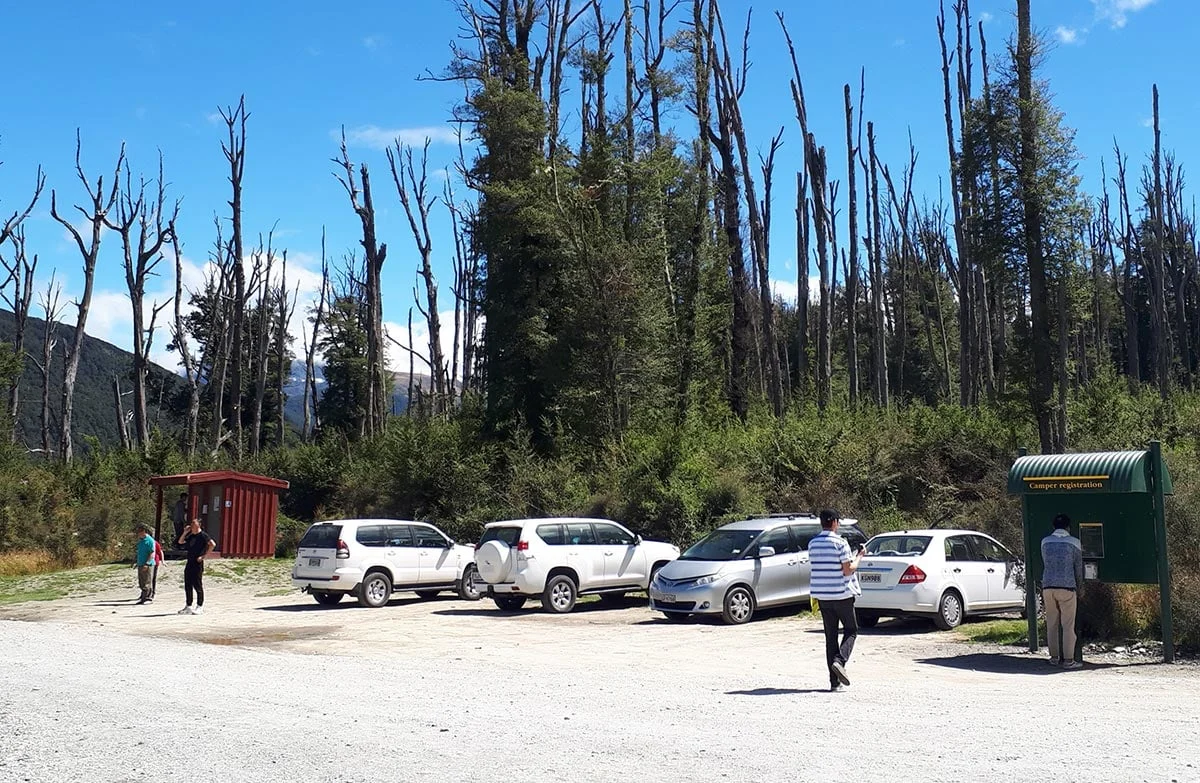
Illustrative photograph. The camper registration kiosk and adjoining gravel area at Diamond Lake Campsite near Glenorchy. Capture date not supplied by DOC; this photograph does not establish current conditions, facilities or availability. Arrival-planning illustration, not a recommendation for an airport transfer or a late check-in.
Photo: Department of Conservation (NZ) / CC BY 4.0 / DetailsPlan the gap between landing and your first campsite: outdoor gear declarations, transport, food, vehicle handover and a workable late-arrival alternative.
Last checked 21 October 2026 / By Outdoor Next / Editorial standards
On this page
Plan the first night around arrival uncertainty, not the furthest distance you could drive. A useful arrival plan gets everyone through the airport, fed and into suitable accommodation without depending on a perfect flight, instant vehicle collection or a late supermarket visit. Save the ambitious walking day for after you have rested.
Prepare the bags before departure
Clean used outdoor equipment before travel and declare it on arrival. MPI's declaration guidance includes used hiking footwear, tents and camping equipment. Keep these accessible for inspection rather than buried under everything needed for the holiday. Clean appearance does not remove the declaration requirement.
Use the official New Zealand Traveller Declaration service and check its submission window for your journey. Each traveller needs a declaration, including children. Our outdoor biosecurity guide covers the wider trip; here, the practical aim is to avoid unpacking your entire camping kit at the border.
Choose an overnight you can actually reach
NZTA's visitor guidance advises resting before driving when you first arrive. Decide who will assess fatigue and what happens if nobody should drive. A transfer to accommodation and vehicle collection later can be worth investigating; confirm the arrangements rather than assuming either service exists.
Compare candidates in the campsite directory, but assess the whole arrival sequence. A short map distance can still involve an unfamiliar access road, a locked gate or a vehicle you have not learned to operate.
Ask for the handover details
Confirm late-arrival arrangements directly with your accommodation provider. Send your expected arrival window and ask these specific questions:
| Handover | What you need in writing |
|---|---|
| Rental vehicle | Collection location, latest handover, required documents and delay contact |
| Accommodation | Exact entrance, check-in process and after-hours access |
| Sleeping setup | What bedding or equipment is supplied for the product booked |
| Food | A meal plan that still works if arrival is delayed |
For a campervan, leave time for the operator to demonstrate the vehicle's systems. Ask how to isolate power, identify the drinking-water filler and use the waste tanks. Do not treat a hurried handover as proof you understand an unfamiliar setup.
Build a delay branch
Write one fallback alongside the main plan: whom to contact, where you could stay and how you would get there. Check cancellation or change terms before paying. A roadside pull-off is not an automatic overnight alternative, and an unanswered message is not permission to enter a closed campground.
Keep the first evening's essentials together: booking details, charged phone, weather layers, medicines and sleeping items. Arrange food that does not depend on finding equipment or fuel immediately. Recheck any imported food against MPI's requirements.
Before you leave the airport
- Tell the accommodation provider if your arrival window has changed.
- Confirm the onward transport, entrance and overnight arrangement.
- Reassess whether the intended driver is rested.
- Save addresses and contact details offline.
- Use the camping checklist to identify missing essentials, not to add another distant shopping stop.
Cover: Registration kiosk at Diamond Lake Campsite. Illustrative planning photograph, not a current service or availability report. Photo, source and licence. Guide sources reviewed 21 October 2026.
Sources & official links
- New Zealand Traveller Declaration (New Zealand Government)
- How to declare items when arriving in New Zealand (Ministry for Primary Industries)
- Visiting New Zealand (NZ Transport Agency Waka Kotahi)
Frequently asked questions
Should I drive straight from the airport to a remote campsite?
Do not make a long drive the only workable option after a flight. NZTA advises allowing time to rest before driving on arrival; arrange a nearby overnight or transfer if you are tired.
Do clean hiking boots still need declaring?
MPI requires used outdoor equipment to be declared, even when it appears clean. Pack it where it can be inspected and ask a biosecurity officer when uncertain.
Does a campsite booking guarantee entry after reception closes?
No. Ask the operator about the actual gate, key, check-in and late-arrival process, and what to do if your flight is delayed.
Keep planning