Best Camping Spots in New Zealand: How to Choose
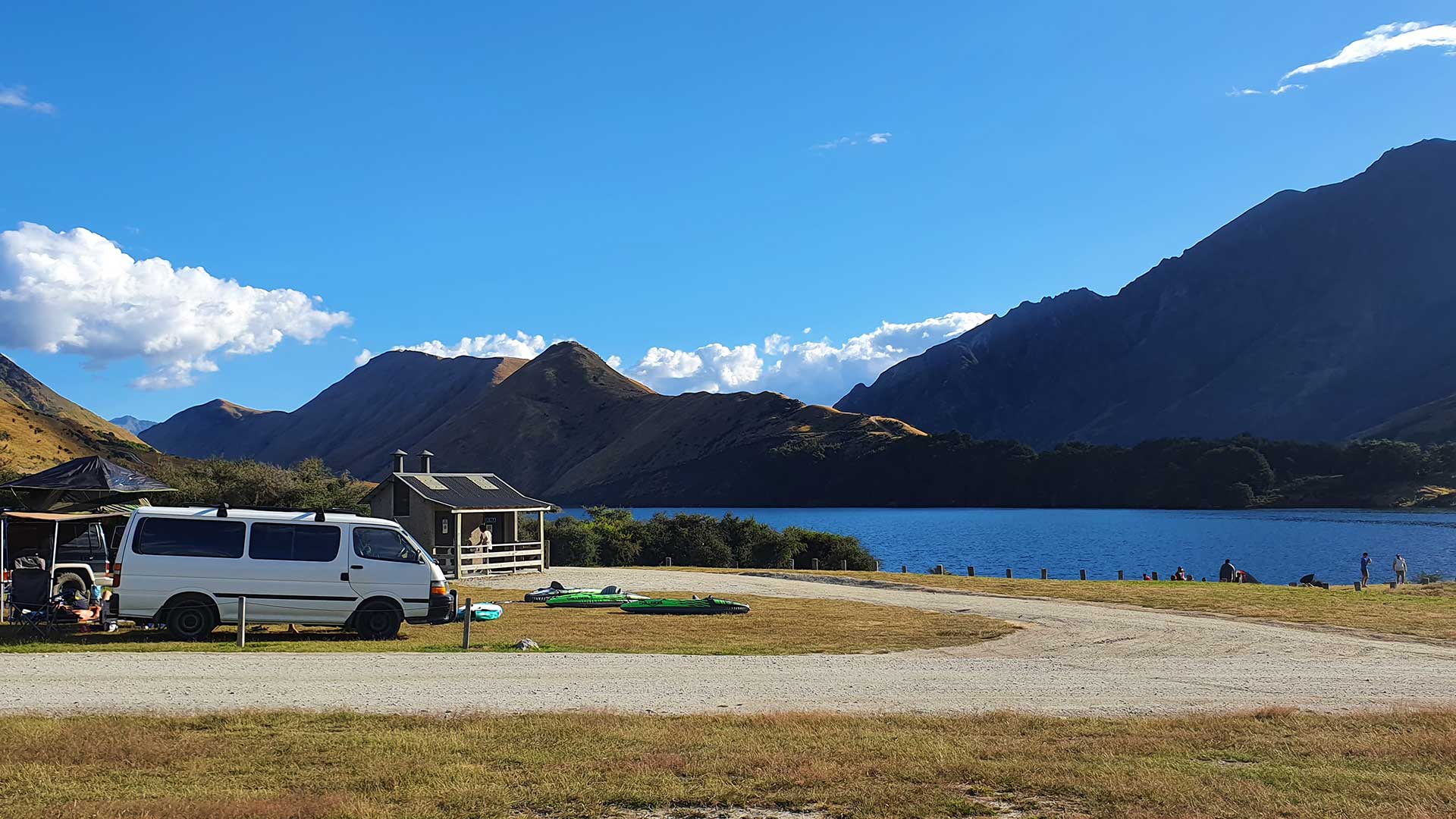
Moke Lake Campsite near Queenstown, a specific example of a DOC lakeside camping area. Photograph date not supplied by DOC.
Photo: Rebecca Orpin / Department of Conservation (NZ) / CC BY 4.0 / DetailsCompare DOC campsites, holiday parks and freedom camping, then shortlist places by access, facilities, bookings and the conditions for your trip.
Last checked 24 September 2026 / By Outdoor Next / Editorial standards
On this page
The best camping spot is one that fits your transport, sleeping setup, facilities and planned activities. Start with those requirements, then compare locations. A lakeside view is not useful if your vehicle cannot reach the site or you need services it does not provide.
Use our campsite directory and campsite selection guide to build a shortlist.
Choose the kind of stay
| Type | What to establish |
|---|---|
| DOC campsite | Category, individual fee, booking method, access and water information |
| Holiday park | Available site type, services, total price and arrival arrangements |
| Designated freedom camping area | Eligible vehicles, exact boundary, stay limits and facilities |
| Walk-in campsite | Track access, carrying requirements and current conditions |
DOC is not a synonym for basic or free. Its campsite categories page describes different service levels and tells visitors to check individual pages for charges and booking arrangements. A water supply also does not necessarily mean treated drinking water.
For a holiday park, verify the facilities you need rather than assuming every operator supplies kitchens, laundry, power or hot showers.
Shortlist real places
These existing guides are useful starting points for a South Island itinerary:
Compare their access and facilities, then follow the official links for current conditions and availability. Their inclusion here is not a ranking, an assurance of spare capacity or permission to camp elsewhere around the same lake.
For a tent, start with a campsite that explicitly accepts tents. For a campervan, separate campground options from freedom camping rules.
Match the season to the actual location
NIWA's climate overview describes substantial differences between northern, southern, inland and alpine conditions. It identifies January or February as usually warmest and July as usually coldest. Those averages do not predict conditions on your travel dates.
Do not describe a whole region as reliable or forgiving in every shoulder season. Check a local forecast and think through wind exposure, wet ground and overnight temperatures. Our time-to-visit guide helps compare seasonal trade-offs.
Plan the day as well as the night
If the purpose of the stay is walking, check track access separately from campsite access. Choose a route using the walking-track guide, then allow time to return and prepare camp before dark.
For a first family trip, favour manageable logistics and a clear exit plan over a remote location. The camping with children guide covers the planning questions.
Keep a usable backup
Book where booking is required. For a first-come site, identify another lawful stop before leaving mobile coverage. A nearby roadside pull-off is not an automatic substitute.
If rain changes the plan, use the wet-weather camping guide to assess whether to continue, change sites or choose different accommodation.
Before you go
- Confirm vehicle access and acceptance of your tent or campervan.
- Check the current fee, booking and arrival instructions.
- Verify drinking water, toilets and waste arrangements.
- Read weather and closure notices.
- Keep a realistic alternative and finish the packing list.
Sources & official links
- Campsite categories: facilities and fees (Department of Conservation)
- Overview of New Zealand's climate (Earth Sciences New Zealand / NIWA)
- Land Safety Code (Department of Conservation)
Frequently asked questions
What is the best campsite in New Zealand?
There is no single best choice. Match access, facilities, weather and activities to the people travelling, then check the current official site page.
Are all DOC campsites basic and free?
No. DOC has several categories with different facilities and charges. Check the individual site's fee and booking arrangements.
Does summer guarantee suitable camping weather?
No. Use the forecast for the actual site and plan for changes, especially at exposed or high-elevation locations.
Keep planning