Area & getting there
Walker Creek Campsite
DOC campsite reference point, not a verified entrance or individual pitch.
Official location information: Department of Conservation (new tab)Location source & precision
- Reference coordinates
- -45.10137, 167.96608 (latitude, longitude)
- Precision
- WGS84 coordinates retained at the official service's returned precision; decimal resolution is not survey accuracy. Source positional accuracy is not specified.
- Source
- DOC Maps campsite reference point (WGS84), exact official-page asset ID (new tab)
Department of Conservation - Location source checked
Read the full guideArrival, planning and local advice
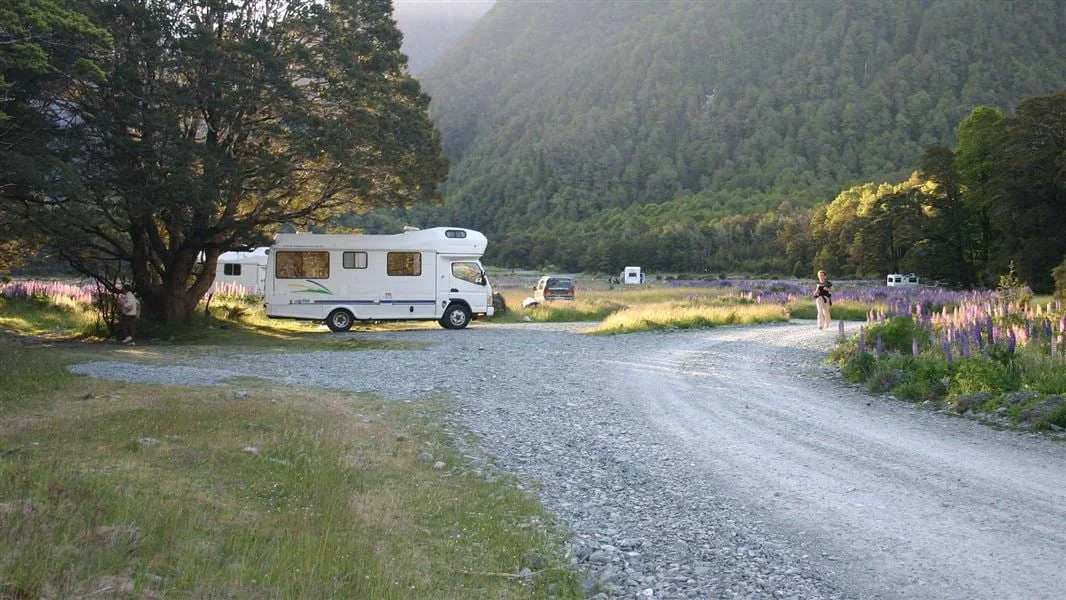
- Small Eglinton River campsite on the lower part of Milford Road.
- Car and campervan access are listed; caravan stays are not verified.
- Check Milford Road and weather notices before travel. No dogs.
- Camping styles
- tent, campervan
- Fees
- NZ$18 per adult (18+) per night, non-powered. Recheck the total for your dates.
- Water
- Stream supply, not verified potable. Bring drinking water or suitable treatment.
Small Eglinton River campsite on the lower part of Milford Road.
Make the stop part of the route
Walker Creek is beside SH94 north of Te Anau, reached on gravel. Decide whether this is the night's destination before starting the final stretch rather than leaving the choice until everyone is tired. Keep the reservation and official directions accessible, and check onward road conditions separately. If the next morning has a fixed activity, calculate the journey from this campsite with a sensible buffer instead of borrowing a travel estimate from another overnight stop.
Keep a small camp footprint
DOC describes a small campsite beside the Eglinton River. Set up with consideration for the other visitors and avoid making equipment storage sprawl into shared space. An uncomplicated evening can suit the location better than adding several activities after arrival. If anyone wants to explore beyond camp, agree where they will go and when they will return, while keeping the cooking and sleeping preparations manageable for those staying behind.
Organise water before dinner
Bring a drinking-water reserve and suitable treatment rather than assuming stream water can be used directly. Prepare meals with equipment you carry, and organise lights and warm layers before it becomes dark. Keep tomorrow's breakfast and travel clothes apart from wet gear. Before departure, check the site around chairs, tent pegs and storage compartments as well as the sleeping space. A few minutes of deliberate packing helps avoid a rushed start to the road journey.
Check the official campsite information for current restrictions, facilities and booking arrangements.