Area & getting there
Mavora Lakes Campsite
DOC campsite reference point, not a verified entrance or individual pitch.
Official location information: Department of Conservation (new tab)Location source & precision
- Reference coordinates
- -45.26801, 168.17500 (latitude, longitude)
- Precision
- WGS84 coordinates retained at the official service's returned precision; decimal resolution is not survey accuracy. Source positional accuracy is not specified.
- Source
- DOC Maps campsite reference point (WGS84), exact official-page asset ID (new tab)
Department of Conservation - Location source checked
Read the full guideArrival, planning and local advice
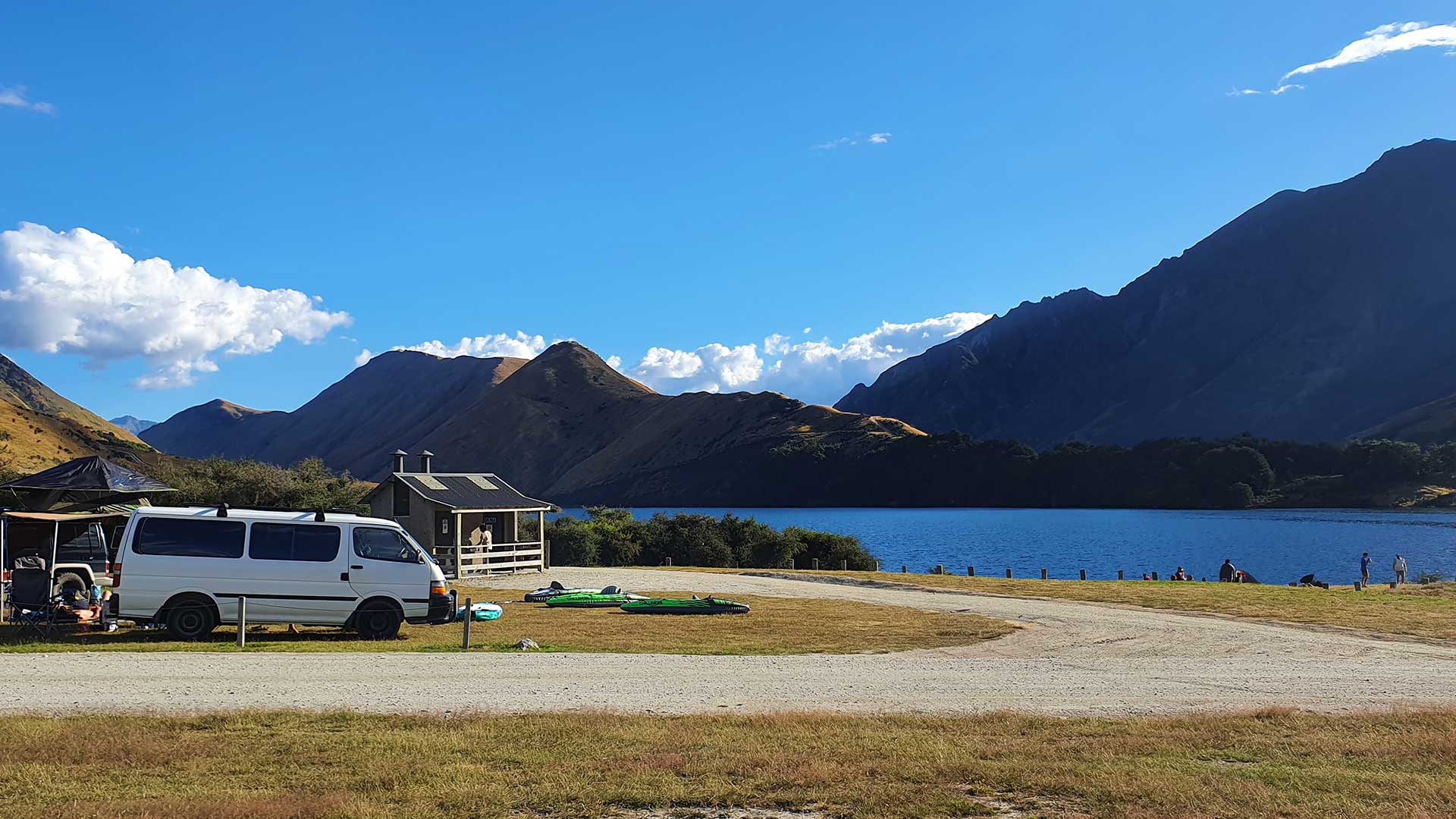
- One camping destination covering the two principal Mavora Lakes camping areas.
- Only use formed vehicle roads; campsite access does not authorise driving every backcountry track.
- No motorised craft on South Mavora Lake; no jet skis. Carry out rubbish.
- Camping styles
- tent, campervan, caravan
- Fees
- NZ$10 per adult (18+) per night, non-powered. Recheck the total for your dates.
- Water
- No tap water in winter. Bring drinking water until supply is confirmed; available tap water is untreated.
One camping destination covering the two principal Mavora Lakes camping areas.
Allow for the gravel-road journey
Mavora Lakes is reached on gravel roads from SH94 between Mossburn and Te Anau. Treat the drive as part of the camping trip rather than a quick stop between those towns. Check conditions before leaving the main road and consider the return forecast. Arrange shared supplies in advance, especially if the party arrives in separate vehicles, so the first people can establish a useful camp without waiting for essential cooking or shelter equipment.
Choose activities for the correct lake
DOC manages the principal camping areas as one Mavora Lakes destination. Decide where you intend to stay and what activities fit that location, rather than assuming that arrangements at one lake apply everywhere. Keep a simple shore-based alternative to any water activity. If some people plan a longer walk or ride, agree on return arrangements and separate their equipment from the overnight camp so both groups can function independently.
Bring water and an organised camp
Book before travelling and arrive with drinking water, particularly around winter. Keep enough for cooking and the following morning while you confirm any local supply. Plan a compact setup with waste storage that will work for the full stay. Before leaving, inspect both the sleeping and meal-preparation areas. Do not let a multi-night visit spread gear so widely that packing becomes difficult or items are overlooked when the weather changes.
Check the official campsite information for current restrictions, facilities and booking arrangements.