Area & getting there
Lake Taylor Campsite
DOC campsite reference point, not a verified entrance or individual pitch.
Official location information: Department of Conservation (new tab)Location source & precision
- Reference coordinates
- -42.77355, 172.25386 (latitude, longitude)
- Precision
- WGS84 coordinates retained at the official service's returned precision; decimal resolution is not survey accuracy. Source positional accuracy is not specified.
- Source
- DOC Maps campsite reference point (WGS84), exact official-page asset ID (new tab)
Department of Conservation - Location source checked
Read the full guideArrival, planning and local advice
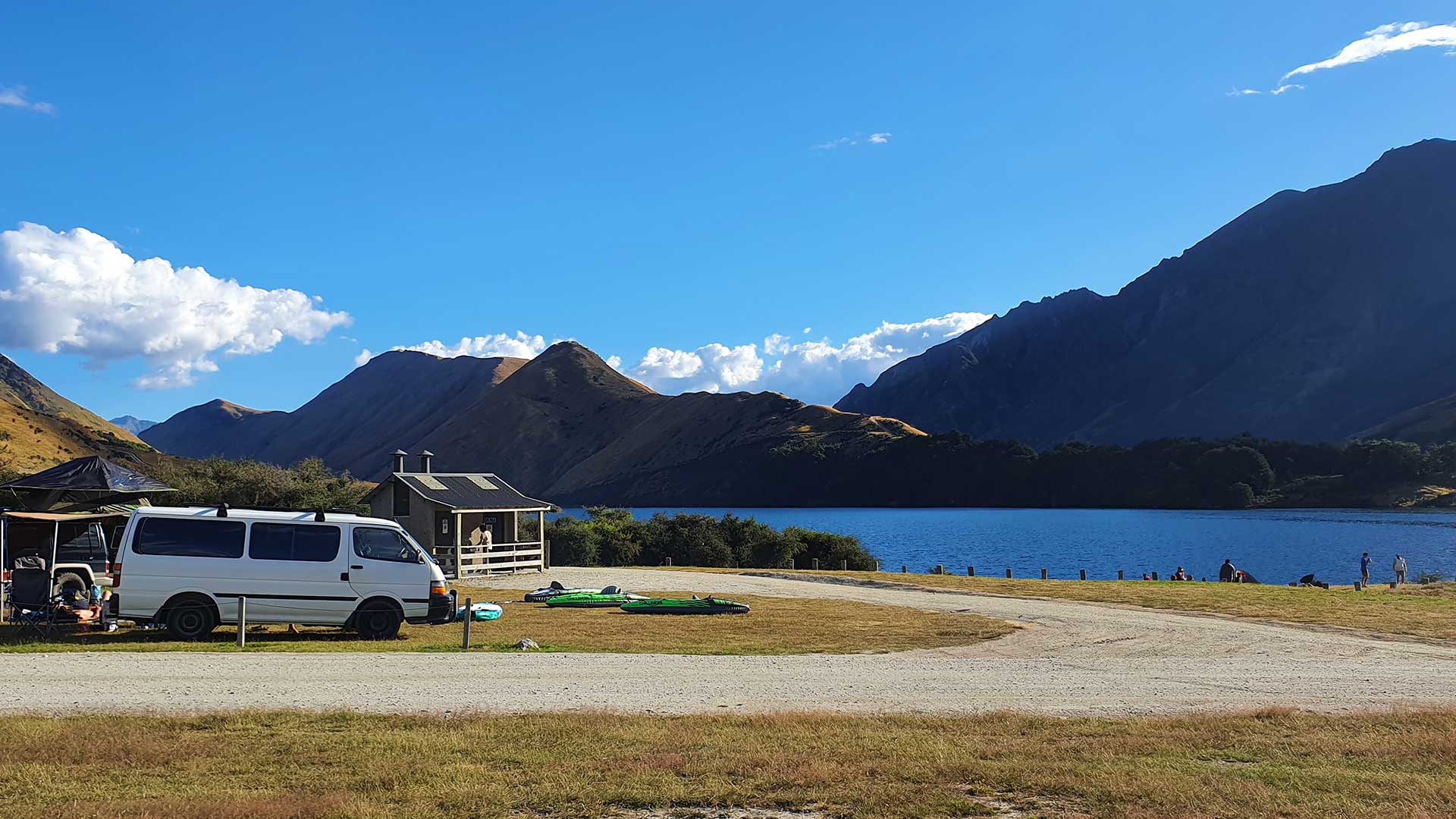
- Exposed lakeside camping at the end of a demanding Lake Sumner Road approach.
- Narrow gravel road has sharp corners and steep drops; verify suitability for your vehicle.
- DOC warns of exposure and falling branches; avoid camping beneath trees. No fires.
- Camping styles
- tent, campervan, caravan
- Fees
- NZ$10 per adult (18+) per night, non-powered. Recheck the total for your dates.
- Water
- Untreated tap water; DOC says to boil before use. Carry a reserve.
Exposed lakeside camping at the end of a demanding Lake Sumner Road approach.
Allow time beyond Hawarden
Lake Taylor is reached via Hawarden and Lake Sumner Road. Treat the last part of the drive as a substantial approach rather than a short hop suggested by a map pin. Check current conditions before departure and discuss the route with a vehicle owner or rental provider if needed. Build the schedule around a daylight arrival so there is no pressure to continue simply because a camping reservation has already been paid.
Choose this for the lake setting
DOC describes a lakeside campsite that is very exposed to weather. Base the decision to stay on the forecast and the shelter you actually carry, not on how attractive the lake looks in a photograph. Keep an alternative plan if the equipment or group's comfort level does not match conditions. Decide on walking or cycling after camp is organised, with each outing planned independently rather than assuming a nearby route is straightforward.
Secure a practical overnight
Reserve before visiting and bring cooking equipment despite the listed shelter. Pack enough warm, dry clothing to make the evening comfortable without relying on a fire. Keep drinking water ready for arrival and separate the morning's food from supplies intended for longer outings. Before sleeping, check loose equipment and review the departure plan with the group. Leave time to pack methodically the next day, particularly if the tent or outdoor gear is wet.
Check the official campsite information for current restrictions, facilities and booking arrangements.