By Outdoor Next Editorial standards
On this page
Key facts
- DOC access
- Open dog areas and permit-controlled areas have different conditions.
- Camping permission
- Some DOC campsites accept dogs subject to their own access rules.
- Vehicle workaround
- Keeping a pet in a vehicle does not automatically resolve DOC access restrictions.
Checked against official sources on 1 October 2026. Confirm with the official source before you go.
Plan a camping holiday with your dog around an entire permission-checked itinerary, not a pet-friendly badge beside a campsite name. Check dog access for every overnight and daytime stop separately. Keep unresolved stops out of the plan until the relevant authority or operator has answered.
Start with the dog-inclusive version of the holiday
Write down what your group actually wants to do between arrival and departure. Include walks, beach visits, lunch stops and any activity where the dog would need alternative care. Our campsite selection guide covers the general comparison; add a separate dog-access column rather than trying to remember exceptions.
Choose a backup that works for the dog as well as the people. A spare campground is not useful if its pet conditions remain unknown. For an early trip, consider a settled base with checked local outings rather than a different overnight every day. That is a planning preference, not a claim that one region is more welcoming than another.
Read permission before interpreting facilities
At the time of checking, DOC's pet guidance distinguishes open dog areas from controlled areas requiring a permit. Some campsites accept dogs under specified conditions. A lead is not a substitute for permission to enter. DOC also warns that keeping a pet in a vehicle does not automatically bypass restrictions on conservation land.
Treat this as a reason to check the exact listing and signs, not as a complete legal summary. Ask DOC about unclear boundaries before travel. Certified disability assist dogs have separate provisions in the same guidance; ordinary pet planning should not be used to decide their access.
Make a short permission record
Use one row for each place and retain the original source link. Avoid copying an old review into the answer column as though it came from the operator.
| Part of the trip | Question to settle | Record to keep |
|---|---|---|
| Overnight | Is this booking category suitable for my dog on these dates? | Operator confirmation and conditions |
| Arrival | Is there a required check-in or designated area? | Arrival instructions |
| Day outing | Does permission cover the intended route and approach? | Authority page or direct answer |
| Alternative | Can we use this option with the dog if plans change? | Confirmed conditions and contact |
For a private or council campground, ask about your actual dates, number of dogs and accommodation type. Ask whether any areas or activities are excluded, and whether prior approval is needed. These are questions to resolve, not assertions that every operator imposes the same restrictions.
Keep the operator's answer alongside your booking confirmation. If the answer is only a general promotional phrase, follow up with the specific question that affects your stay. A clear refusal is useful information: it lets you redesign the trip before paying for connected activities.
Rehearse daily routines before packing
Plan where the dog will settle while you pitch, prepare meals and pack away. Agree which adult is responsible during each task so that responsibility does not disappear while everyone unloads. Pack familiar bedding, food, bowls, waste bags and the lead setup required by the site. Use the family camping guide to coordinate shared responsibilities if children are travelling too.
Build outings around the access you have confirmed. Do not make leaving the dog behind an improvised answer to a prohibited walk. Arrange suitable care beforehand or choose another activity. For health, medication or travel-tolerance questions, seek advice from your vet; this guide provides no veterinary assessment.
Before you go
- Reopen each authority page and compare it with your recorded answer.
- Save any required permit and the campsite's dog conditions offline.
- Confirm the backup overnight and any planned care arrangements.
- Assign responsibility for the dog during arrival and departure.
- Reconsider any stop whose access remains unclear.
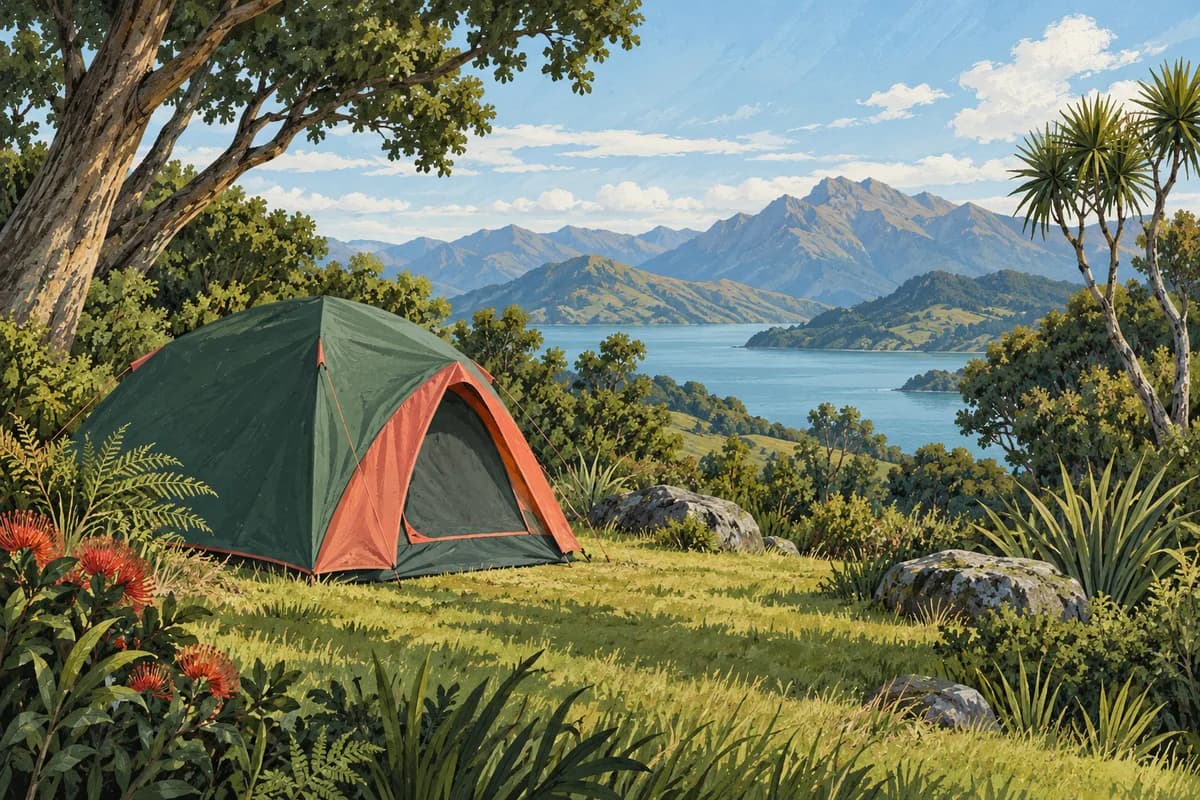
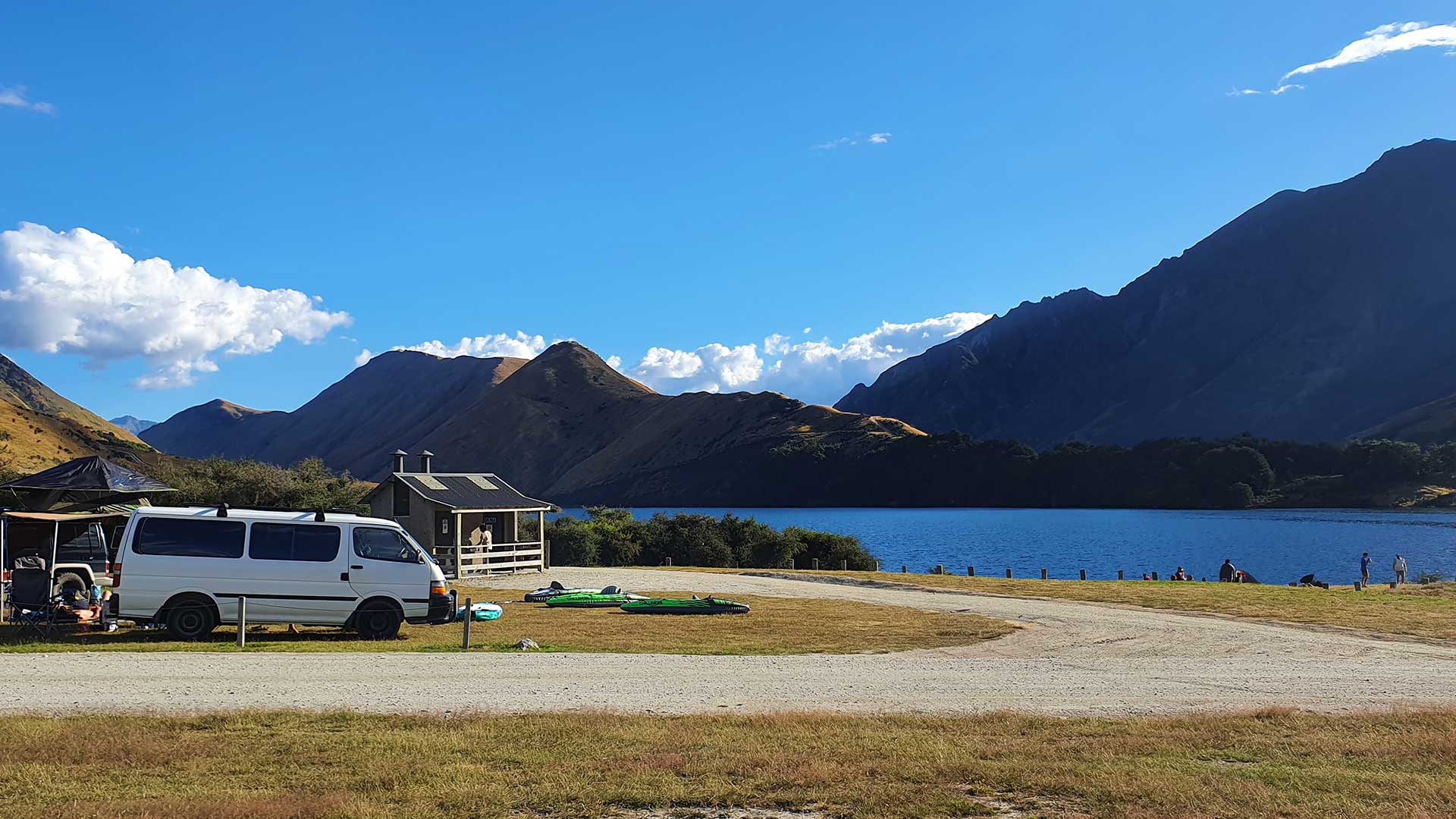
This is a planning method, not a national list of dog-friendly sites. Permissions, conditions and availability need checking for your journey; no individual campsite has been endorsed here. The accompanying photograph illustrates camping only and does not establish dog access.
Frequently asked questions
Does a dog-friendly campsite make nearby walks dog-friendly?
No. Check the authority's information for each walk, approach and stopping place separately.
Can I leave my dog in the vehicle at a restricted DOC stop?
Do not assume so. DOC's pet guidance also addresses vehicles on conservation land; confirm the particular location with DOC before travelling.
Should I use this guide to plan disability assist dog access?
Certified disability assist dogs have separate DOC provisions. Read the official guidance and discuss practical access needs directly rather than applying ordinary pet restrictions.